Rising Damp Treatment Inner West
We measure the moisture, find where it is coming from and fix it with the right damp course for your walls.
Rising damp is groundwater drawn up into a wall through the pores in brick, stone and mortar. In the Inner West it is one of the most common problems we see, because so many homes here were built between the 1850s and the early 1900s with solid masonry walls and either no damp course at all or one that has failed over the past century. Good rising damp treatment starts with finding out exactly why a wall is wet, because the same stain on a skirting board can have three or four different causes.
Why Inner West homes get rising damp
Victorian terraces in Glebe, Balmain and Newtown were mostly built with slate or bitumen damp courses, or none at all. Slate cracks when the house moves, and bitumen goes brittle. Federation cottages in Haberfield, Ashfield and Dulwich Hill often have damp courses that have since been buried by concrete paths and garden beds. Low-lying streets near the Cooks River, Iron Cove and the old creek lines through Marrickville and Leichhardt also sit closer to the water table, so walls there have more water to draw on.
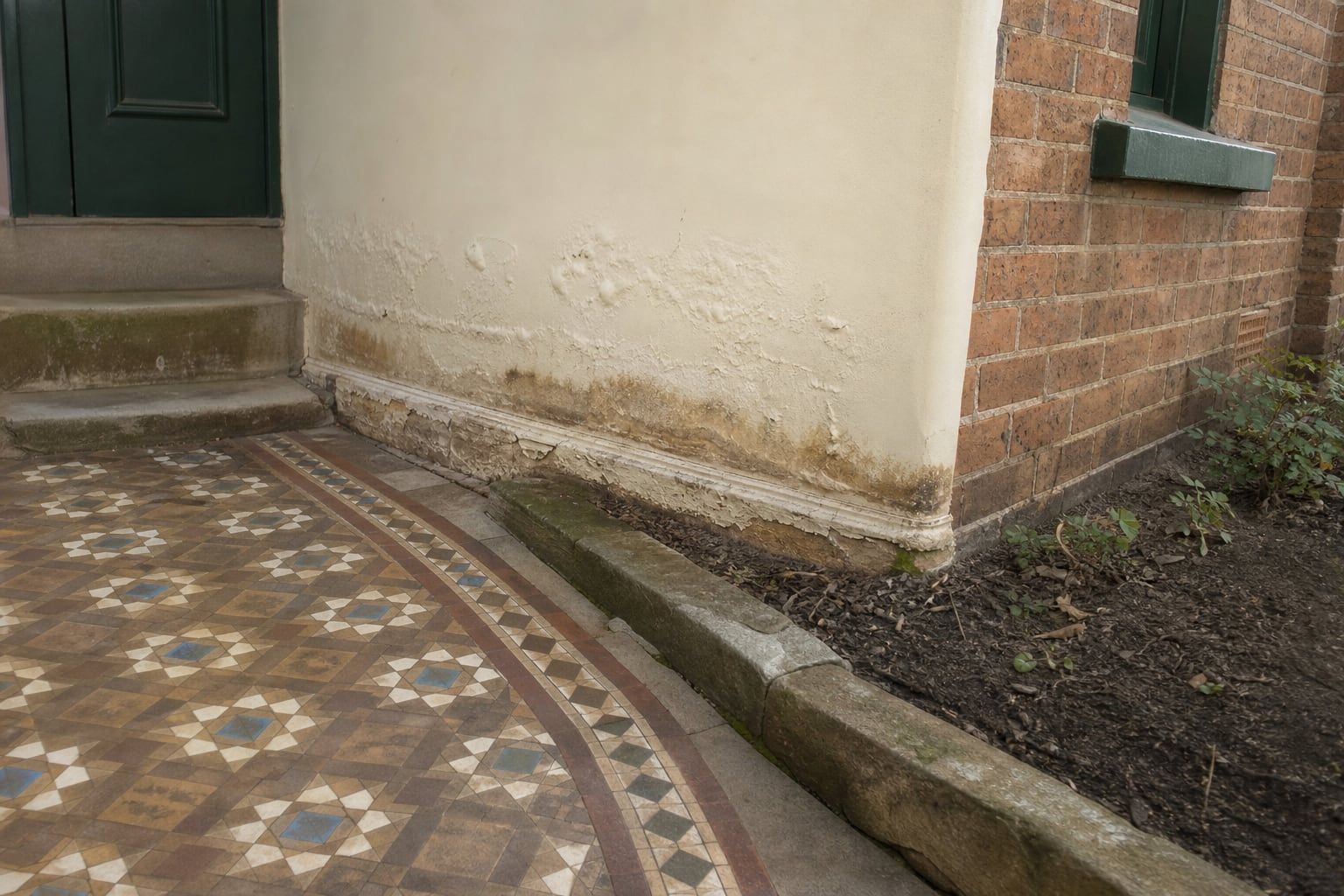
Over the years, many homes have also had their courtyards raised, their subfloor vents blocked or their outside walls rendered in cement. Each of those can push moisture higher up the wall even when the original damp course is still there.
How we work out the cause
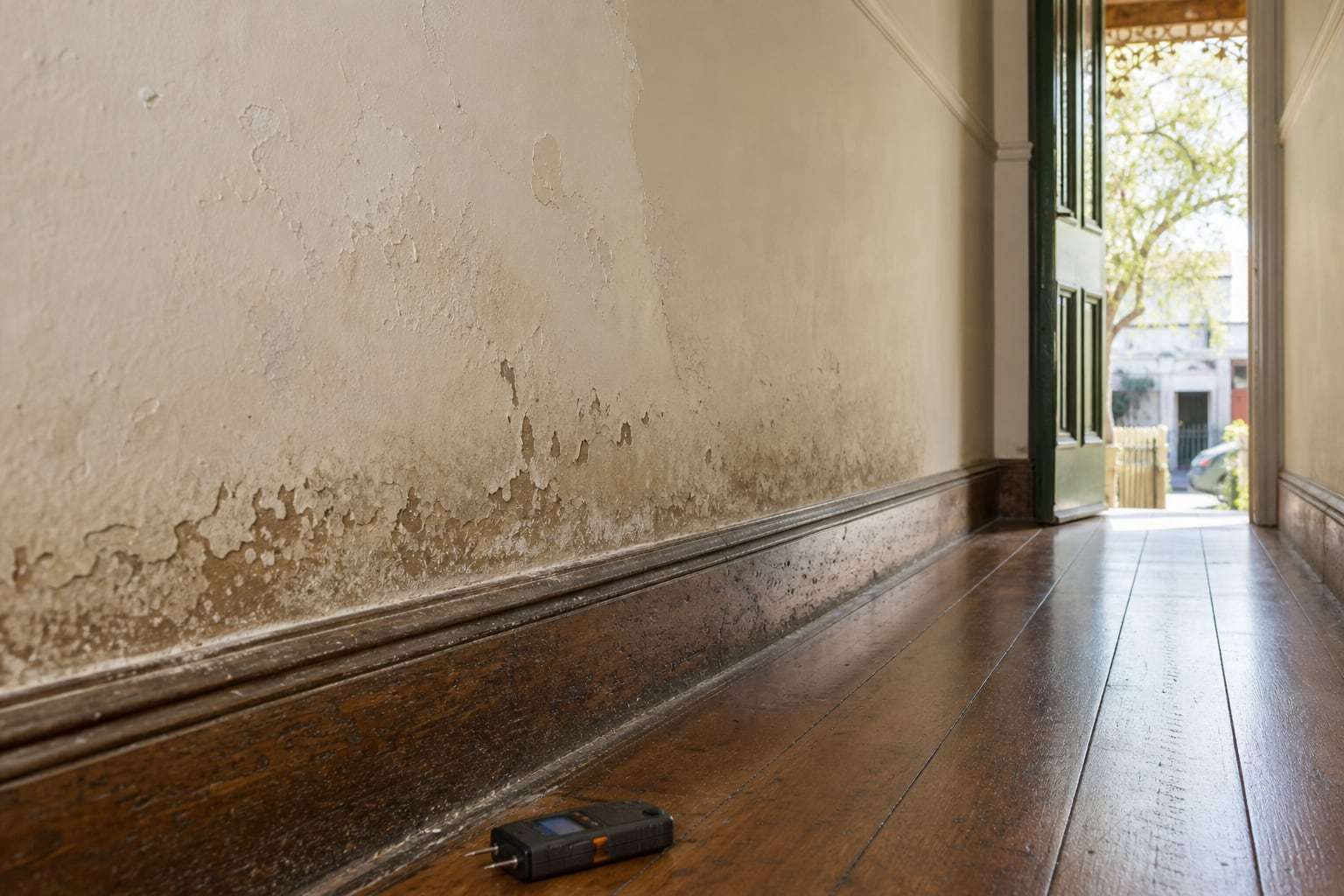
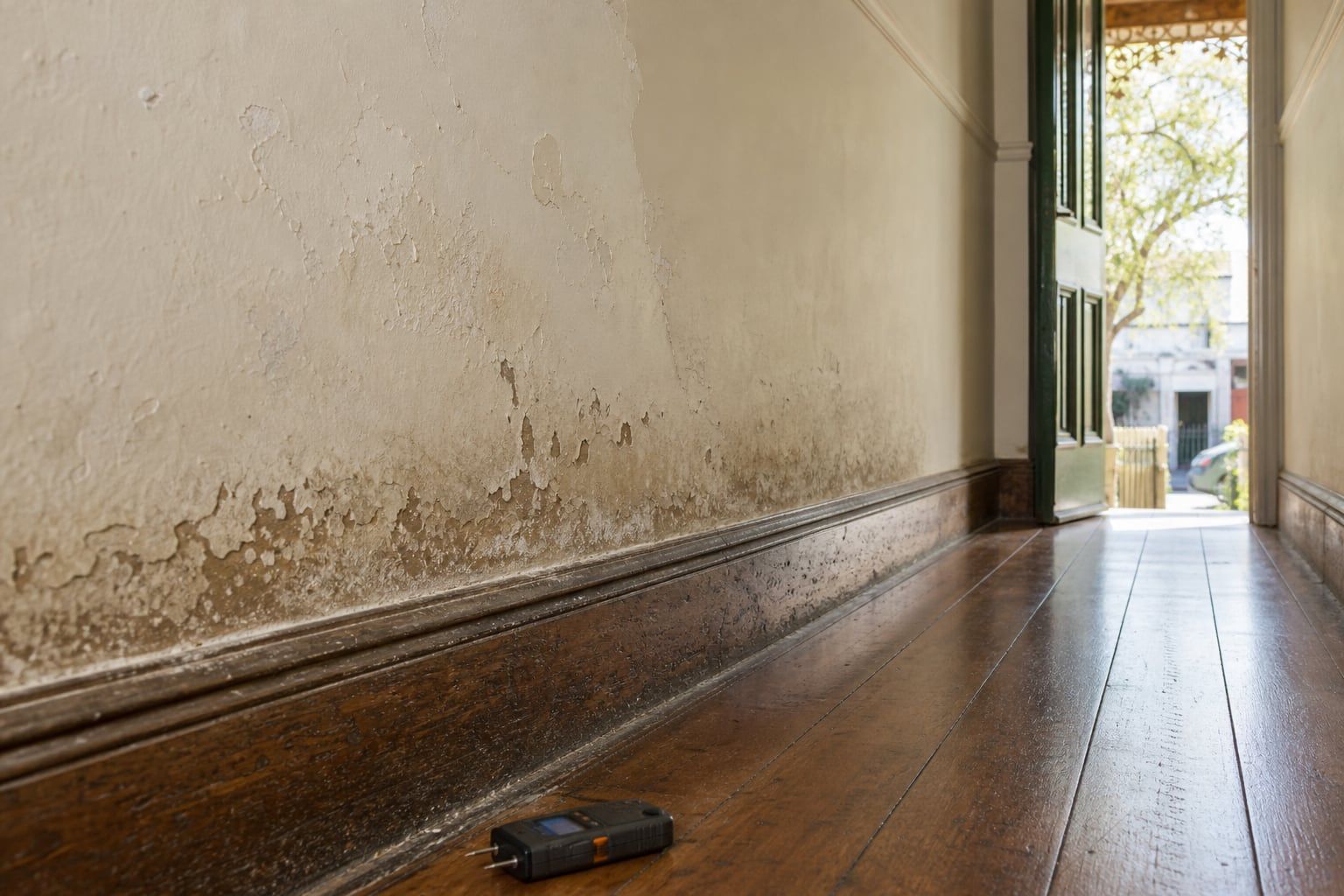
At the inspection we take readings from the floor up on internal and external walls, check the level of the ground and paving against the damp course line, look for leaking downpipes and plumbing, and check the subfloor for airflow. If the problem is a blocked vent or a high garden bed, we tell you, because fixing that can be cheaper than a damp course. If the wall really is drawing water from the ground, we explain which method suits it.
The treatments we use
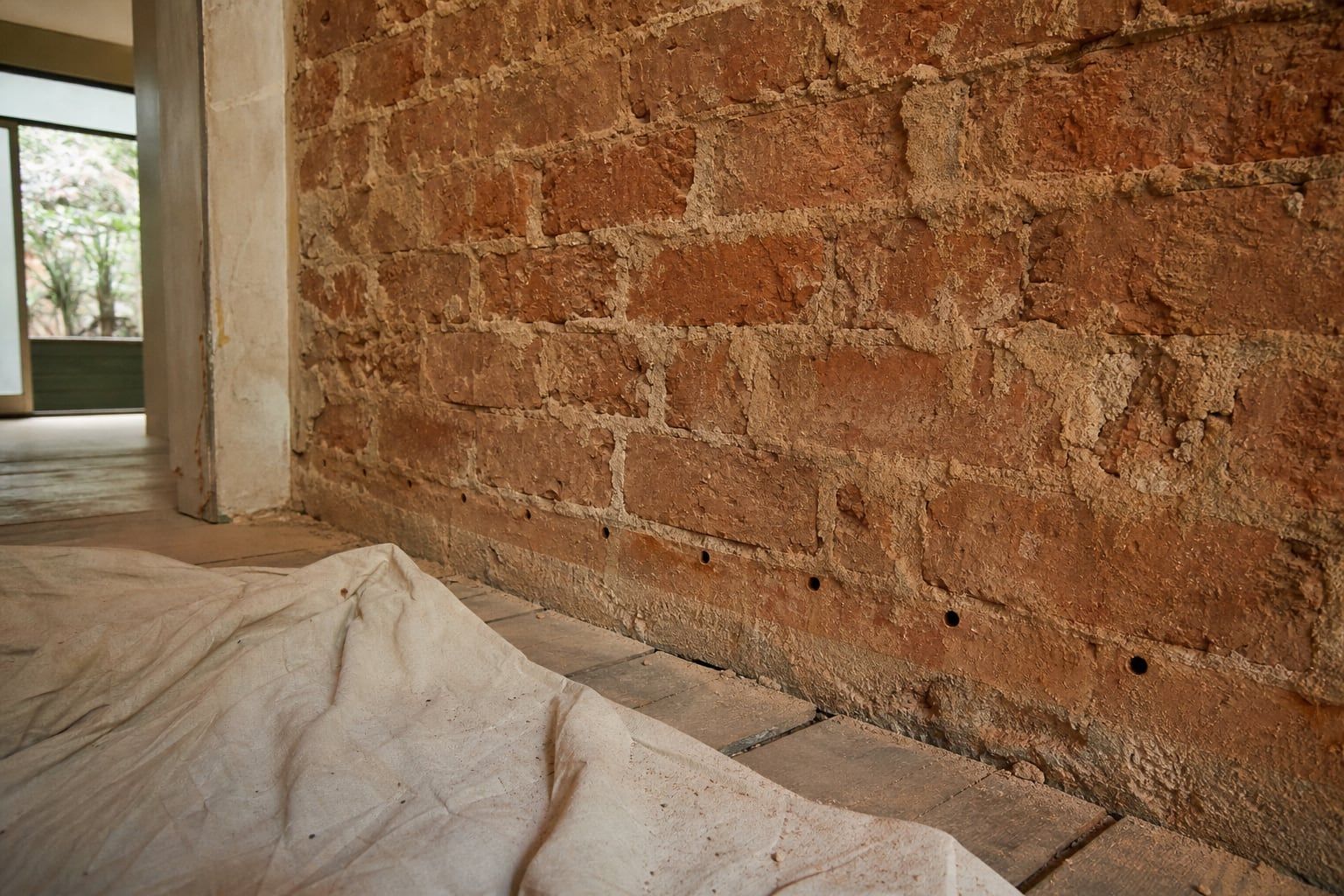
Most solid brick walls are treated with a chemical damp course: a water-repellent cream injected into a row of holes drilled along the mortar joint, which cures into a continuous barrier. Where the mortar is too weak or the wall is rubble-filled stone, a physical damp course may be the better choice. Walls below ground level, such as those beside a dug-out lower floor or against a neighbour’s raised yard, need waterproof tanking instead, because water is pushing in from the side rather than rising.
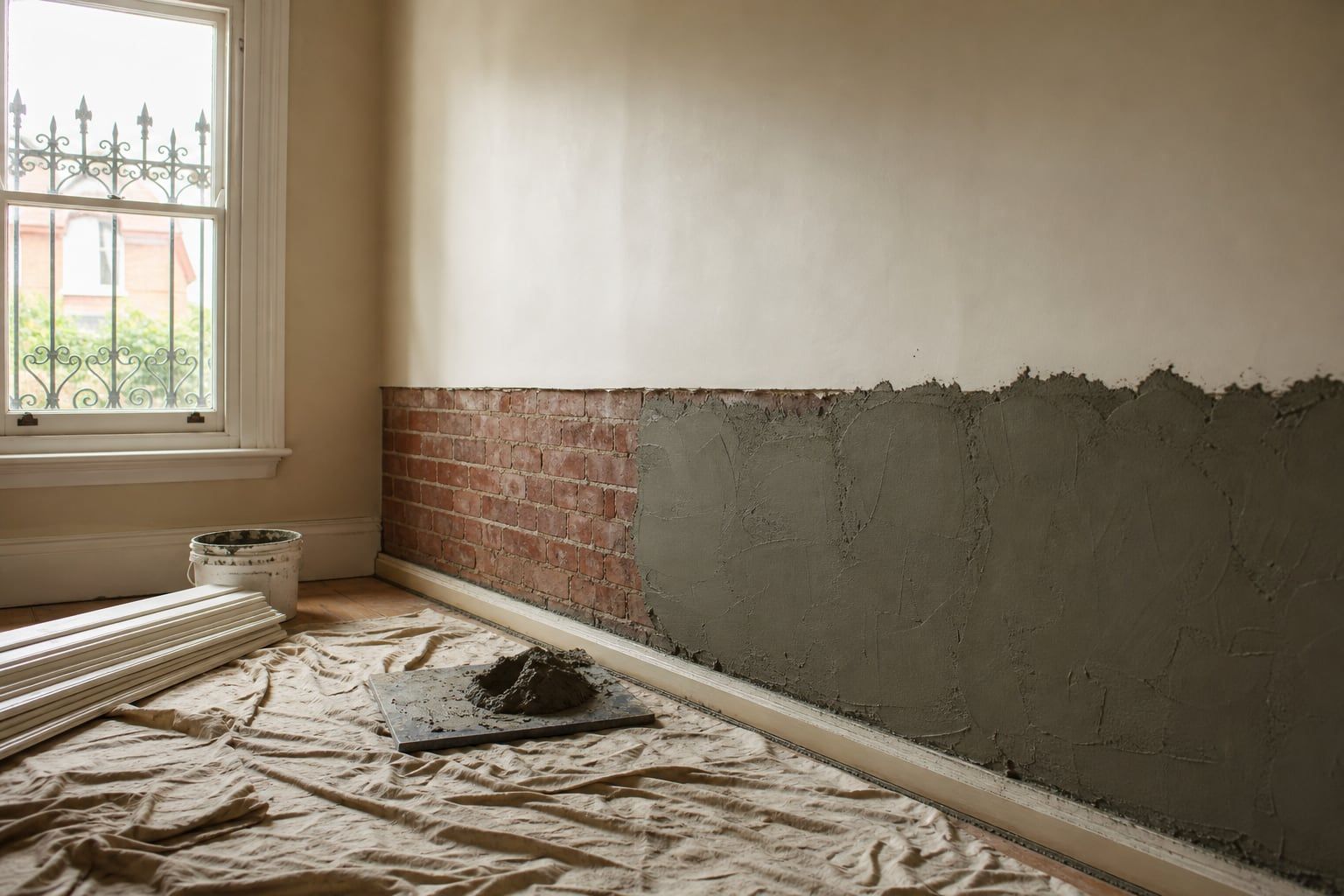
Treating the wall is only half the job. The old plaster above the tide mark is usually full of salt, and if it is left in place it keeps drawing moisture out of the air. That is why most jobs finish with salt-damaged plaster repair using a salt-resistant render.
Timber floors and damp walls
Many Inner West homes have suspended timber floors over a shallow, poorly ventilated subfloor. Damp air trapped under the house feeds rising damp in the internal walls and causes rot and mould under the floor. If readings show the subfloor is part of the problem, we include subfloor ventilation in the quote.
Signs to look for
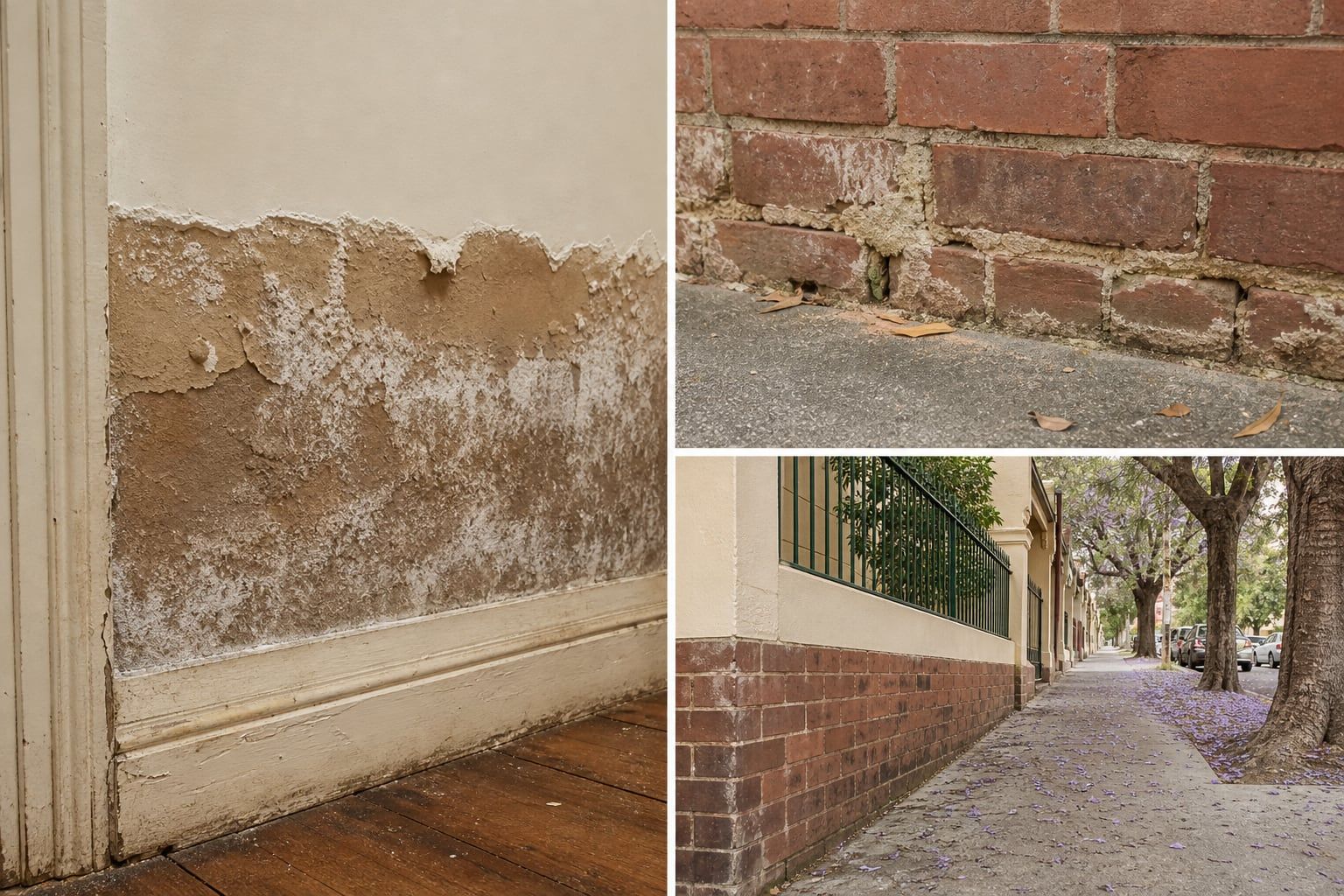
The usual signs are paint that bubbles and flakes along the bottom of the wall, white powdery salt, a brown tide line, skirting boards that feel cold and soft, and a musty smell in closed rooms. Our guides to rising damp tide marks, bubbling paint and plaster and salt efflorescence explain what each one tells you.
Booking an inspection
The inspection is free and there is no obligation to go ahead. You get a written fixed-price quote that lists the walls to be treated, the method, the plaster repairs and the drying time to expect. We cover the whole of the Inner West, from rising damp in Balmain and Glebe to Strathfield and Concord.
Updated
What good rising damp treatment looks like
Frequently asked questions
How do I know it is rising damp and not a leak?
Rising damp leaves a band of damage from the floor up, usually under about a metre, with a tide line and salt above it. A leak or condensation usually shows in patches, near pipes, windows or ceilings. Moisture readings taken at several heights at the inspection tell them apart.
Will the damp come back after treatment?
A properly installed damp course stops moisture rising past it. Damp can still return if something else bridges it later, such as garden beds built up against the wall or a new path laid too high, so we point those risks out when we finish.
Do I have to move out?
No. Most jobs are done room by room with furniture moved off the treated walls. Drilling and plaster removal are dusty, so we seal off the work area and clean up each day.
Rising Damp Treatment in the Inner West: step by step
- Inspect and measureWe walk the house inside and out, take moisture readings at different heights and check gutters, downpipes, ground levels, vents and plumbing.
- Explain the causeYou get a plain-English explanation of where the water is coming from and which walls need treating, with a written fixed-price quote.
- Treat the wallsThe new damp course goes in, usually by injection into the mortar bed, and any bridging soil, paving or render is cut back.
- Repair and dry outSalt-damaged plaster is replaced with a salt-resistant system once the wall is ready, and we come back to check the readings have dropped.
Rising Damp Treatment guides for Inner West homeowners
Rising Damp Treatment across the Inner West
Ready to get it quoted?
Get a fast, free quote from a local damp specialist. No obligation.