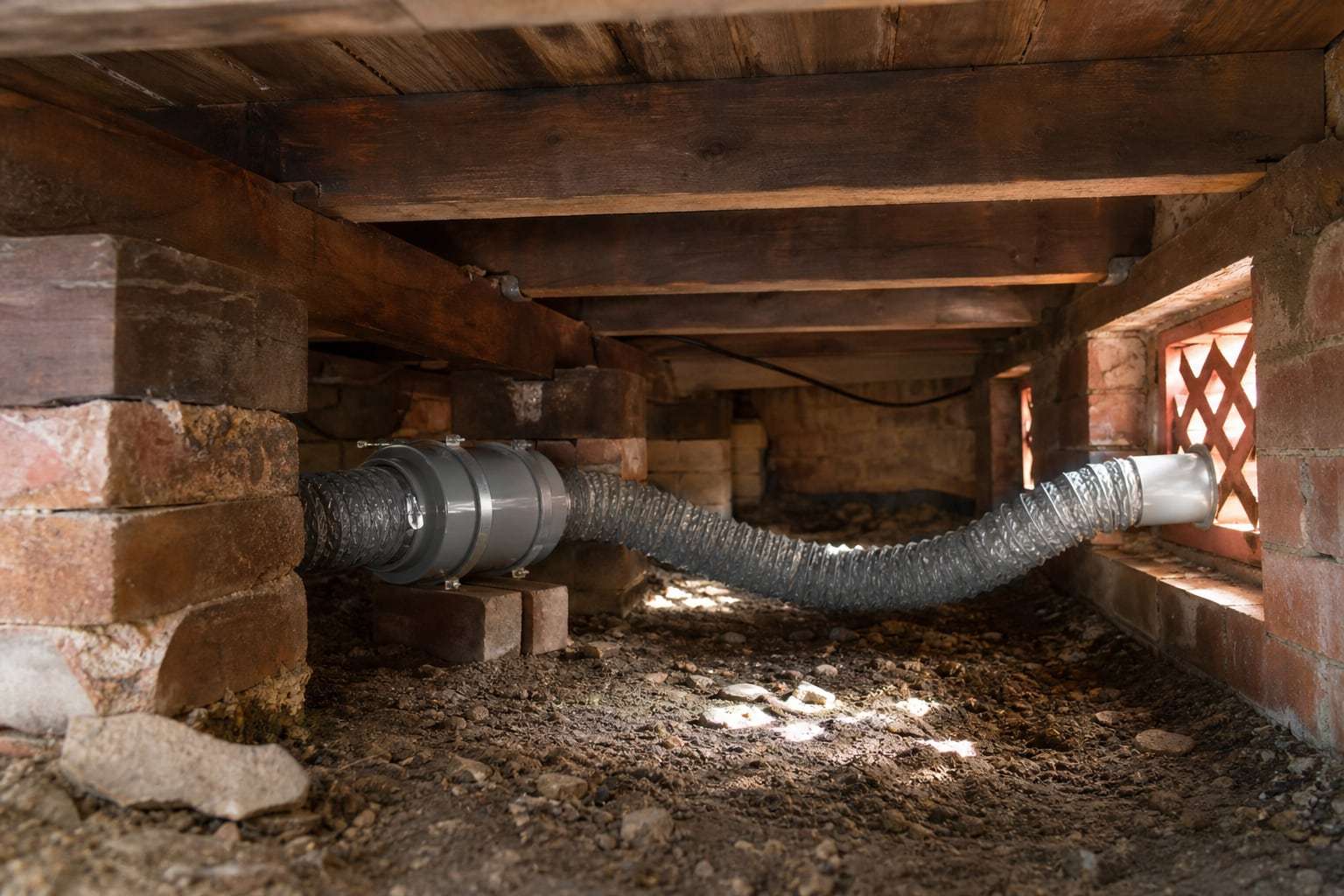
Subfloor Ventilation Inner West
Moving damp air out from under the floor to protect timbers, stop musty smells and help damp walls dry.
Most Inner West terraces and cottages sit on suspended timber floors with a shallow space underneath. When that space can’t breathe, moisture from the ground collects as damp air under the house. It feeds mould and rot in the bearers and joists, causes the musty smell many people notice in closed rooms, and keeps internal walls wet. Subfloor ventilation fixes that by getting air moving through the whole subfloor and out of the house.
Why so many local subfloors are damp
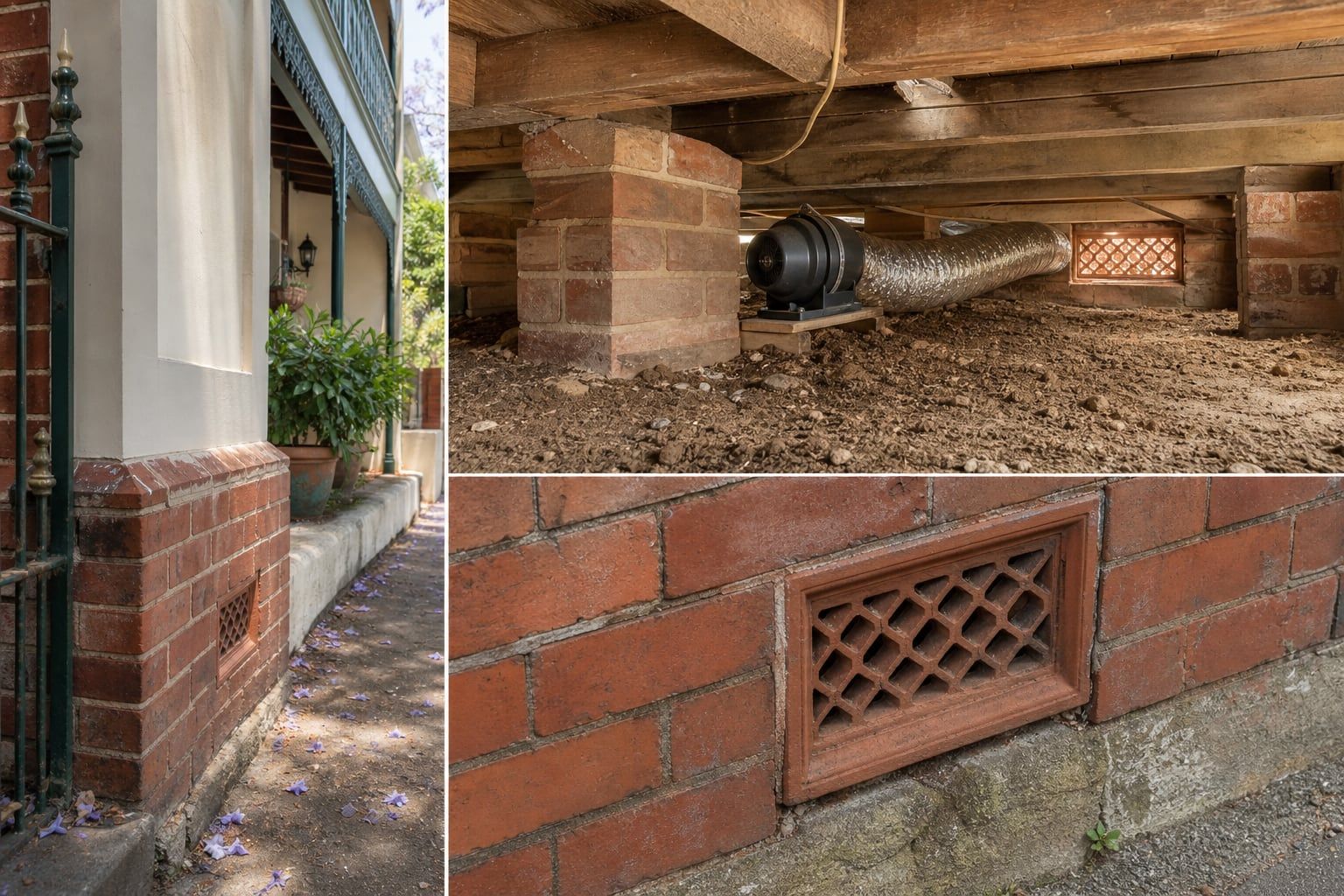
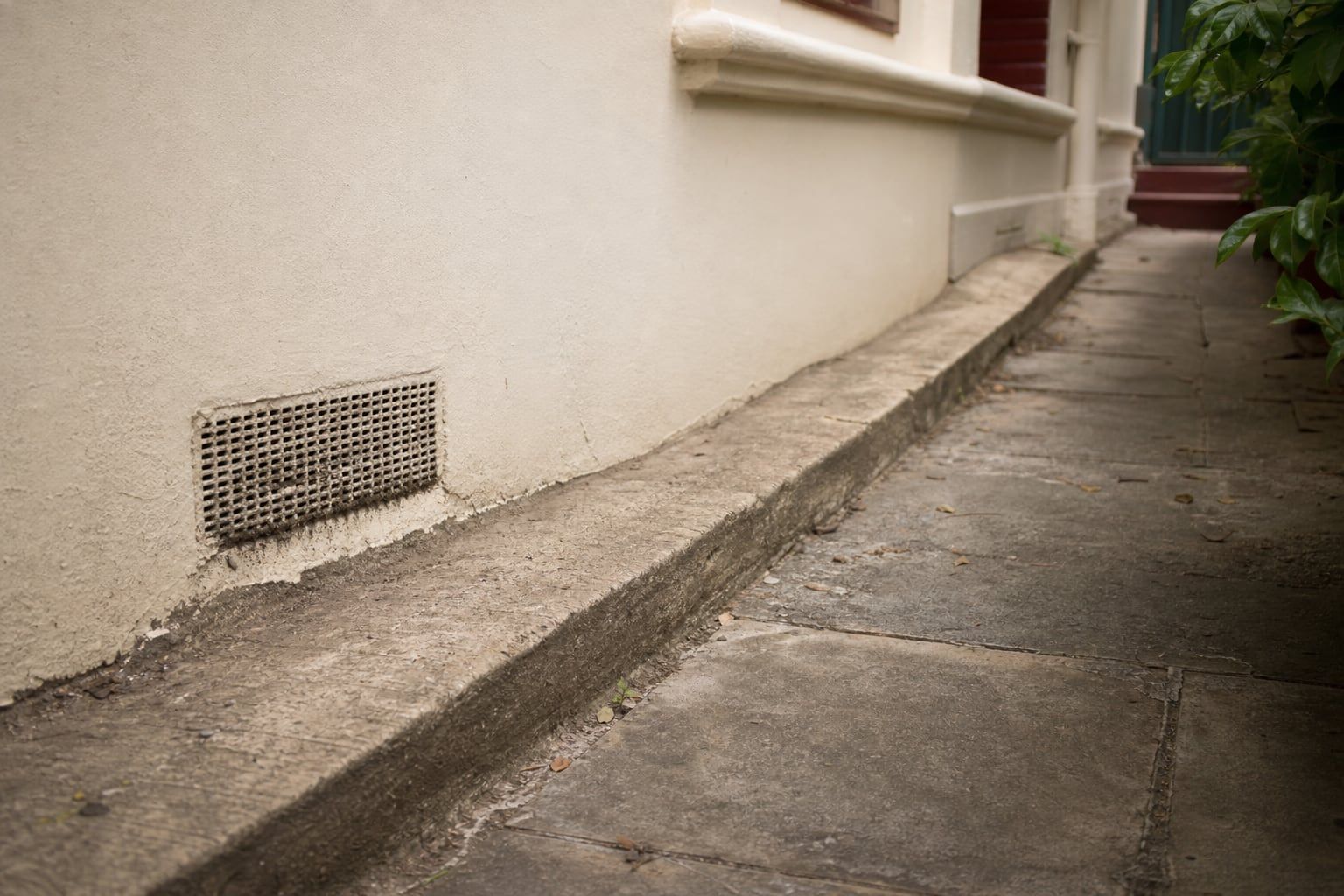
Terrace rows were built with small vents in the front and back walls and solid party walls between houses, so air has a long way to travel and often doesn’t. Over time many vents have been painted over, blocked by raised paths and garden beds, or covered when a courtyard was paved. Rear extensions often closed off the back of the subfloor completely. In low-lying parts of Marrickville, Leichhardt, Five Dock and near the Cooks River, the ground under the house can stay damp for much of the year.
What we install
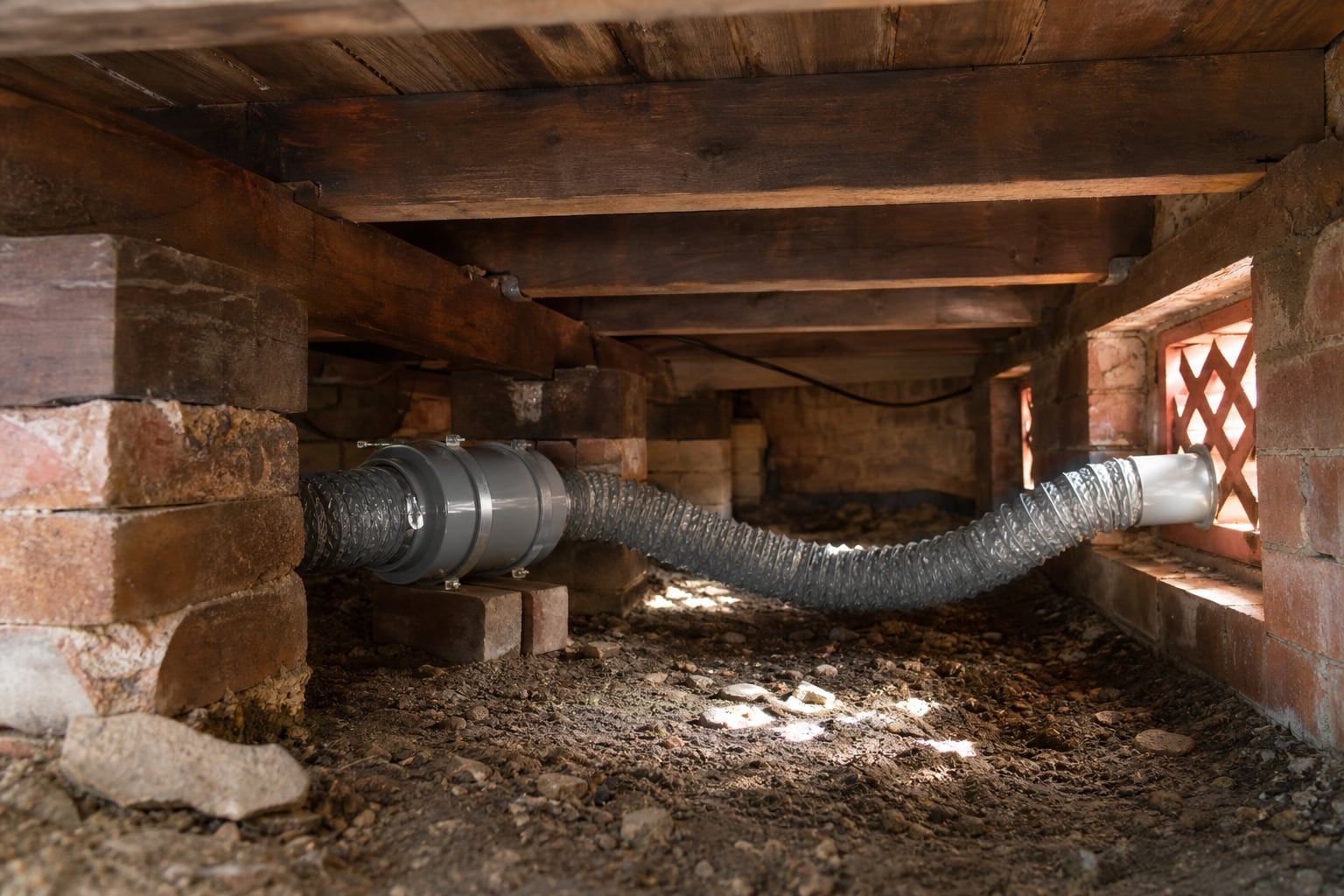
The right fix depends on the house. For some homes, clearing blocked vents, adding a few more and opening up internal walls under the floor is enough. For low or enclosed subfloors we fit a fan system: one or more quiet inline fans with ducting that draw damp air from the subfloor and push it outside, with matching vents to let fresh air in. Fans can run on a timer or a humidity controller, and power is connected by a licensed electrician.
We also look at what is putting water under the house in the first place. Leaking downpipes, broken stormwater pipes, garden beds against the wall and courtyards that slope towards the house are common. Fixing those is often part of the job, and sometimes it needs tanking and drainage work.
Signs your subfloor needs help
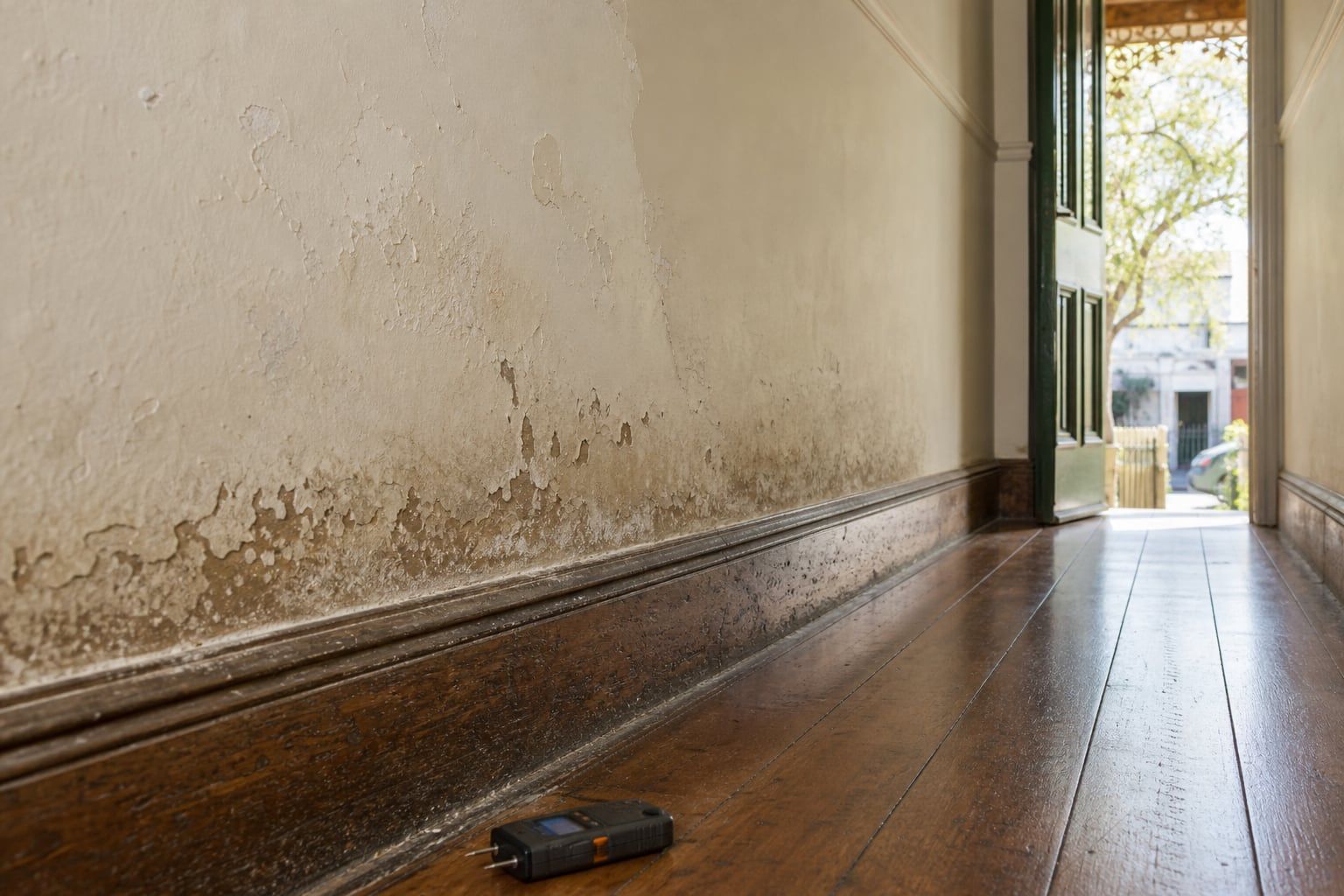
A musty damp smell that’s worst in the morning or when the house has been closed up, floorboards that feel soft or cupped, mould on internal walls and skirtings, and timber that looks dark or furry under the house are all signs. So is rising damp on internal walls that have no outside face, because that moisture is coming from the subfloor.
Ventilation and rising damp together
Subfloor ventilation and a damp course solve different problems. Ventilation removes damp air; a damp course stops water climbing through the wall. In many Inner West homes both are happening, and fixing only one gives a partial result. When we inspect, we check both and tell you plainly if one is enough. Where both are needed we combine them into one quote with our rising damp treatment.
Living with the system
Fans are quiet and usually sit under the floor where you won’t hear them. Vents need to stay clear, so keep plants, mulch and stored items away from them. If you renovate later, make sure any new slab or extension keeps the subfloor airflow open.
Book a subfloor inspection
We inspect under the house, take moisture readings and photos, and give you a written fixed-price quote. We cover the whole Inner West, including rising damp in Leichhardt, Concord and Strathfield.
Updated
What good subfloor ventilation looks like
Frequently asked questions
Do subfloor fans use much power?
Subfloor fans are small and low wattage, and they can run on a timer or humidity control so they only run when they're needed. We explain the options when we quote.
Will vents alone be enough?
Sometimes. If the subfloor is reasonably high and the vents are just blocked or too few, clearing and adding vents may do it. Low, enclosed subfloors in terraces usually need fans to move air through.
Can subfloor ventilation fix rising damp?
It helps damp walls dry and stops damp air feeding the problem, but it doesn't stop water rising through a wall. Where both are happening we treat both.
Subfloor Ventilation in the Inner West: step by step
- Get under the houseWe check subfloor height, existing vents, ground moisture, timber condition and anything blocking airflow.
- Plan the airflowWe work out where air should come in and go out so there are no dead corners left holding damp air.
- Install vents and fansExtra wall vents are cut in where needed and fans are fitted and ducted to push damp air out of the subfloor.
- Check and hand overWe confirm air is moving through every bay and explain the controls and any upkeep.
Subfloor Ventilation guides for Inner West homeowners
Subfloor Ventilation near you
- Abbotsford
- Annandale
- Ashfield
- Ashbury
- Balmain East
- Balmain
- Belfield
- Birchgrove
- Breakfast Point
- Burwood Heights
- Burwood
- Cabarita
- Camperdown
- Canada Bay
- Chiswick
- Concord West
- Concord
- Croydon Park
- Croydon
- Drummoyne
- Dulwich Hill
- Earlwood
- Enfield
- Enmore
- Erskineville
- Five Dock
- Forest Lodge
- Gladesville
- Glebe
- Haberfield
- Homebush West
- Homebush
- Hurlstone Park
- Leichhardt
- Lewisham
- Liberty Grove
- Lilyfield
- Marrickville
- Mortlake
- Newtown
- North Strathfield
- Petersham
- Rodd Point
- Rhodes
- Rozelle
- Russell Lea
- St Peters
- Stanmore
- Strathfield South
- Strathfield
- Summer Hill
- Sydenham
- Tempe
- Wareemba
Subfloor Ventilation across the Inner West
Ready to get it quoted?
Get a fast, free quote from a local damp specialist. No obligation.