Bubbling paint and plaster: is it rising damp?
Why paint blisters and plaster crumbles near the floor of older homes, how to find the cause, and how to repair it so it stays fixed.
Paint that bubbles, blisters and peels along the bottom of a wall is one of the most common complaints we hear from Inner West homeowners. Often the plaster underneath is crumbling too, turning to powder or coming away in sheets when the paint is lifted. It’s frustrating, because it tends to come back no matter how carefully the wall is repainted. This guide explains why bubbling paint and plaster happens, how to tell whether rising damp is the cause, and what a lasting repair involves.
Why paint bubbles on damp walls
Modern acrylic paints form a skin over the wall. When moisture moves through the plaster towards the surface, it gets trapped behind that skin and pushes it away, forming bubbles and blisters. On rising damp walls the moisture also carries salt. As the water evaporates just behind the paint, salt crystals form and grow, prising the paint and the top layer of plaster apart. That’s why you often find white, fluffy crystals under a blister, and why the plaster behind it is soft and sandy.
In the older homes that make up most of the Inner West, the plaster is often lime-based, which coped with a bit of moisture for decades under limewash or traditional paints. Once it was covered with acrylic paint, vinyl wallpaper or a cement patch, the moisture had nowhere to go, and the damage became visible.
Reading the pattern
Where the bubbling is tells you a lot.
A band along the bottom of the wall, fairly level, usually under about a metre, often with a brown or white tide line above it: classic rising damp. See our guide to rising damp tide marks.
Patches on internal walls with no outside face: rising damp fed by a damp, poorly ventilated subfloor. Very common in terraces with timber floors.
A patch around a pipe, a shower or below a window: a leak or a failed seal, not rising damp.
Blistering high on a wall or near the ceiling: a roof or gutter leak, or condensation.
Large areas of lifting paint on a wall with soil behind it: water coming through the wall from the side, which needs waterproof tanking rather than a damp course.
Other things to check
Before blaming the wall, think about what has happened recently. A wall that was repainted soon after a plumbing leak or a wet winter can blister because it was painted while damp. Poor preparation, such as painting over a dusty or glossy surface, also causes peeling, though that usually shows as flakes rather than bubbles and isn’t limited to the bottom of the wall.
Outside, look at the base of the wall. Garden beds, mulch, pavers or a concrete path above the level of the internal floor, downpipes discharging against the wall, and blocked subfloor vents are all common in Inner West homes and all push damp into the wall.
Why patching doesn’t work
The usual DIY repair is to scrape back the loose paint, fill with plaster or filler, prime and repaint. On a rising damp wall this fails for two reasons. First, water is still rising, so moisture keeps arriving behind the new paint. Second, the plaster is full of salt. Salt pulls moisture from the air, so even in dry weather the wall stays damp in humid conditions, and new salt crystals keep forming. Gypsum fillers and plasters break down when they’re wet and salty, so the patch often fails before the surrounding wall does.
Painting with a “damp seal” or waterproof paint is just as risky. It can hold the moisture in for a while, but the water then travels higher up the wall to find another way out, and the damage spreads.
How bubbling paint and plaster is fixed properly
A lasting repair deals with the cause first, then the damage.
Confirm the cause. We take moisture readings at several heights inside and out and check ground levels, drainage and the subfloor. That tells us whether the wall needs a damp course, ventilation, drainage or a combination.
Stop the damp. For rising damp in solid brick walls, the usual fix is a chemical damp course injected into the mortar joint near the base of the wall. Where the subfloor is part of the problem, subfloor ventilation goes in as well.
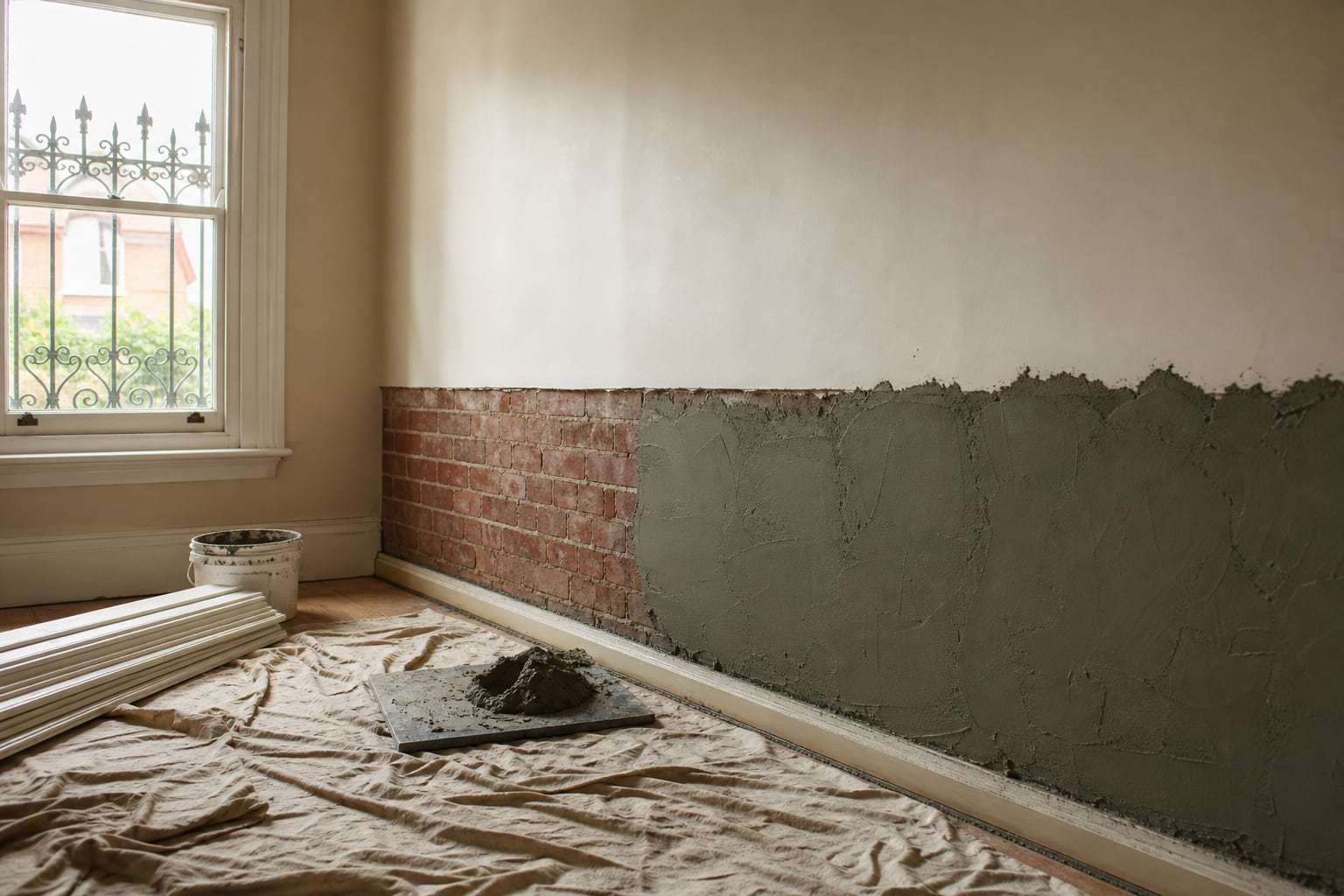
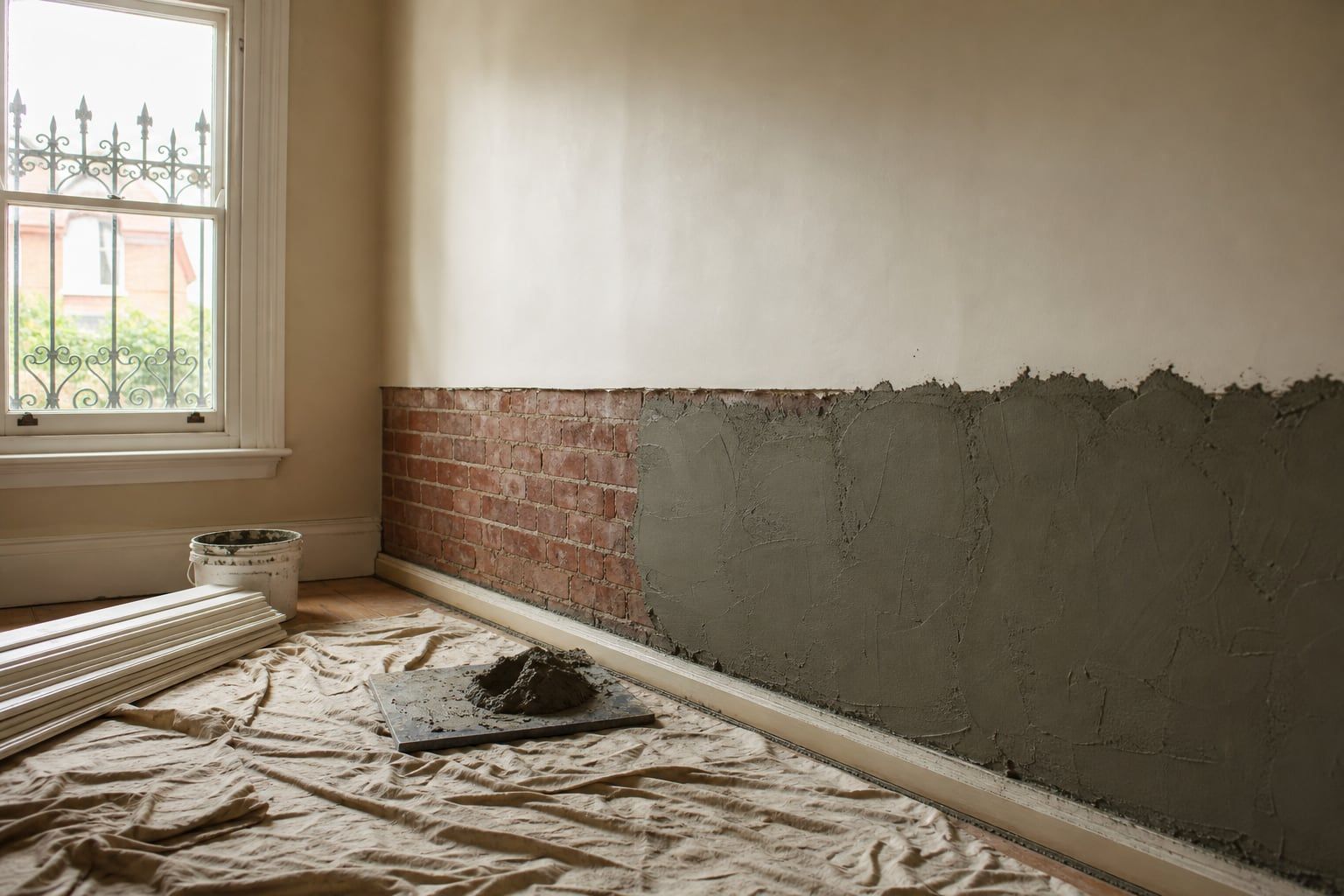
Remove the salty plaster. The damaged plaster is cut back to bare masonry, well above the visible bubbling, because salt travels higher than the stain.
Replaster with a salt-resistant system. A render designed for damp-affected walls goes on in coats, holding the remaining salts inside the render so they can’t attack the paint. This is the core of our salt-damaged plaster repair service.
Repaint with a breathable finish. Once the render has dried, the wall is painted with a breathable paint so any remaining moisture can keep escaping.
Lead paint in older homes
Many Inner West homes built before the 1970s have lead in their older paint layers. If you’re scraping or sanding bubbling paint, keep children and pets away, wear a suitable mask, wet the surface to keep dust down and clean up with a damp cloth rather than sweeping. When we remove plaster and paint, we contain the work area and clean up each day.
Getting it looked at
If the bubbling is along the bottom of the wall, comes back after painting, or comes with a tide line, salt or a musty smell, it is worth getting a proper inspection before spending money on another repaint. Ours is free, and we give you a written fixed-price quote for complete rising damp treatment if it is needed. We work right across the Inner West, including rising damp in Newtown and rising damp in Annandale.
Updated
Frequently asked questions
Why does my paint keep bubbling after I repaint?
Because the cause is still in the wall. Moisture and salt in the plaster push the new paint off the surface. Until the damp is stopped and the salty plaster is replaced, repainting only buys a few months.
Is bubbling paint always rising damp?
No. Poor surface preparation, painting over a damp wall after a leak, or condensation can all cause blistering. Bubbling in a band along the bottom of a wall, with salt or a tide mark, points strongly to rising damp.
Can I scrape and patch the wall myself?
You can scrape loose paint to see how far the damage goes, but patching with ordinary filler or gypsum plaster won't last on a damp, salty wall. Wear a mask, as old paint in pre-1970s homes may contain lead.
Salt-Damaged Plaster Repair in the Inner West
More guides for Inner West homeowners
Ready to get it quoted?
Get a fast, free quote from a local damp specialist. No obligation.