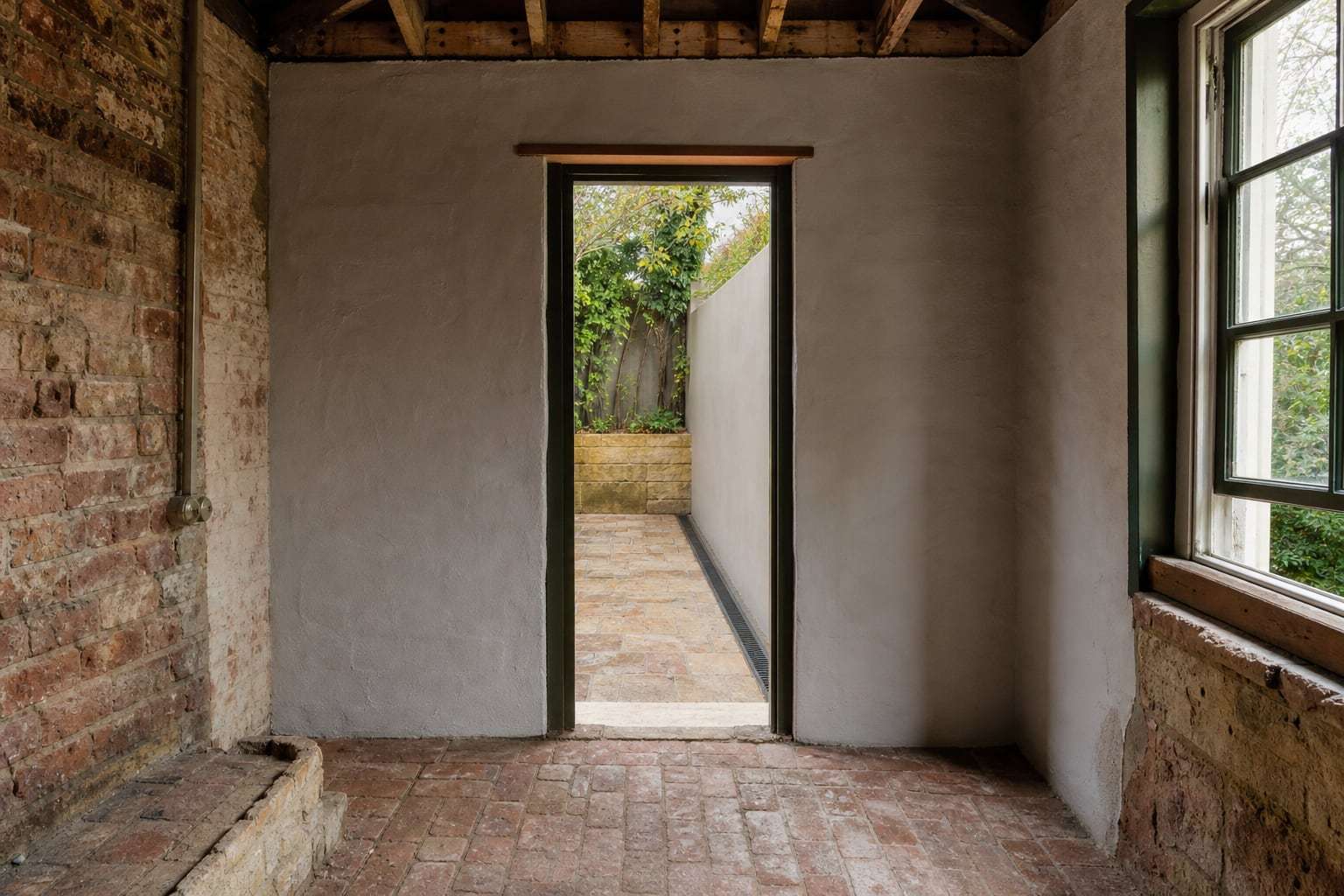
Waterproof Tanking and Drainage Inner West
For walls where water is pushing in from the side, and for the drainage problems that feed damp.
Waterproof tanking is the fix when water comes through a wall from the side. Not every damp wall is rising damp. In the Inner West we often see walls that are wet because soil or water is sitting against them, not because water is climbing from below. Lower-ground rooms dug out under terraces, walls against a neighbour’s higher yard, retaining walls and rooms built into the slope in Balmain, Birchgrove and Earlwood all fall into this group. These walls need waterproof tanking, and often a drainage fix outside.
When tanking is the answer
If the ground outside is higher than the floor inside, a damp course alone can’t work, because water is pushing through the face of the wall below ground level. Tanking, also called negative waterproofing, is applied to the inside face of the wall. It uses a cement-based waterproofing system bonded to the masonry, built up in coats, so it can resist water pressure from behind. It is the usual fix for lower-ground rooms, cellars and walls built against a neighbour’s raised yard.
Drainage: often the cheapest fix
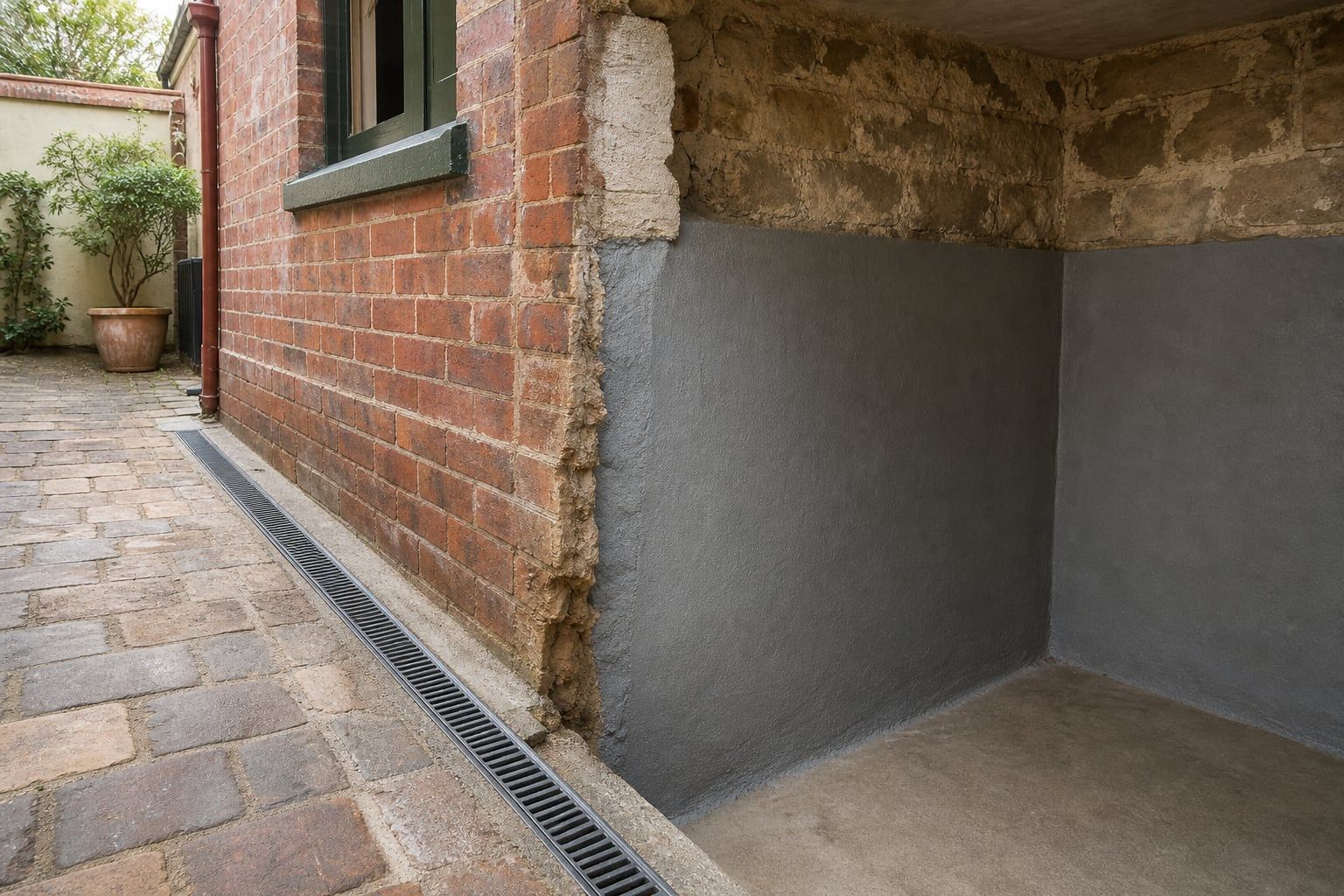
Before we quote tanking, we look at where the water comes from. Common causes on Inner West blocks include courtyards paved with the fall towards the house, downpipes that discharge onto the ground or into broken clay pipes, garden beds built up against the wall, and a neighbour’s yard that sits higher than yours. Fixing the fall, adding a grated drain at the base of the wall, reconnecting a downpipe or lowering a garden bed can make a big difference, and sometimes means less tanking is needed.
Where a drainage fix needs stormwater pipework, a licensed plumber does that part, and we coordinate it.
Walls that need more than one fix
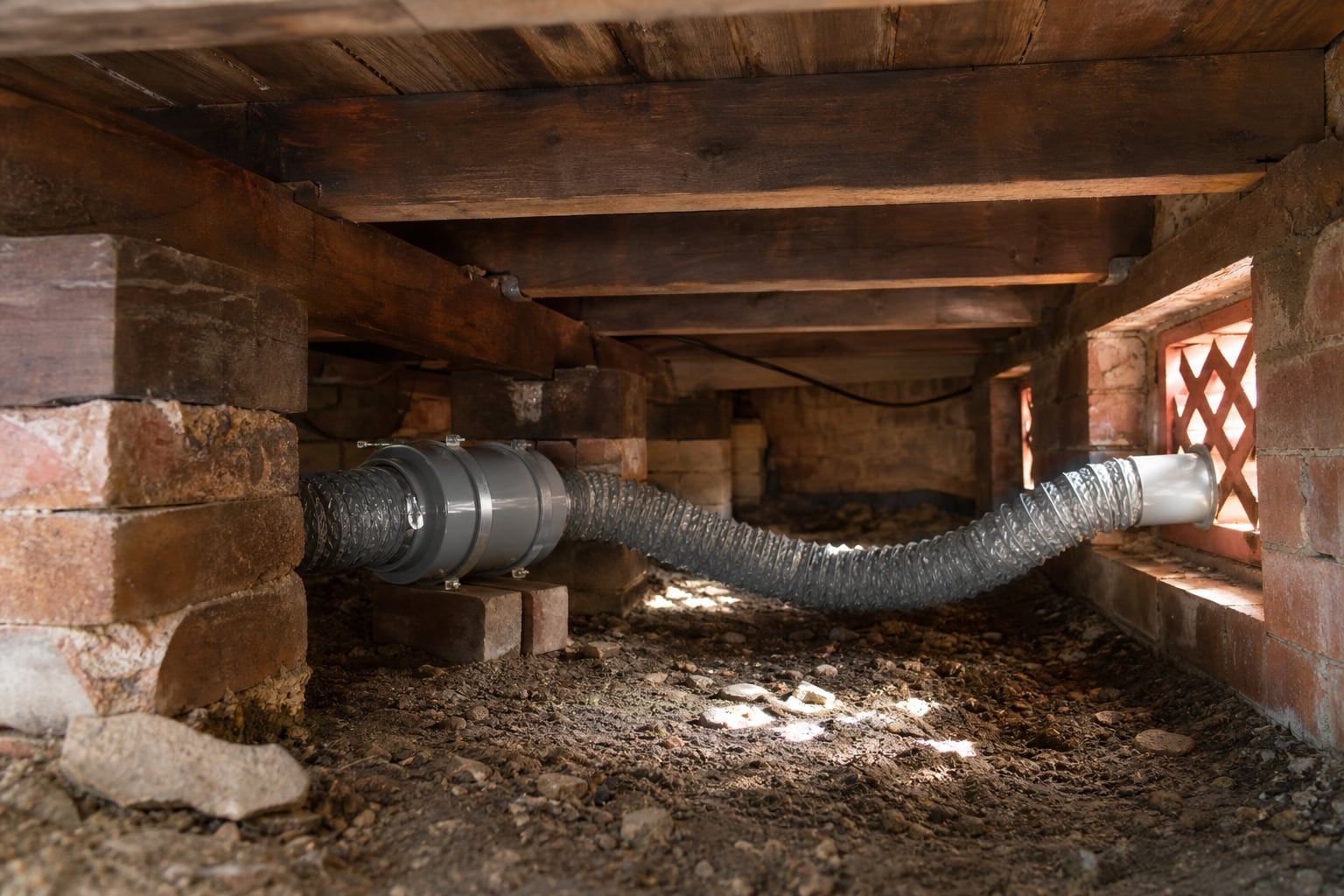
A lower-ground wall can need tanking below ground level and a damp course above it, plus subfloor ventilation under the rooms next to it. We look at the whole wall from footing to ceiling and quote the combination that will actually work, rather than one product for everything. If water rising through the wall is part of it, that is covered in our rising damp treatment.
What waterproof tanking costs depends on
The wall area, how much old plaster and render has to come off, whether the masonry needs repairs before it can be tanked, and access all change the price. A small cellar wall is a very different job to a full lower-ground room, so we measure everything at the inspection and give you a written fixed price that covers preparation, tanking, finishing and any drainage work we have agreed on.
Finishing the wall
Once the tanking has cured, the wall is finished with a render or lining that suits the room. Because the tanking is doing the waterproofing, the finish can be ordinary, but it still needs to be compatible with the system underneath, so we specify it as part of the job.
Signs of a side-on water problem
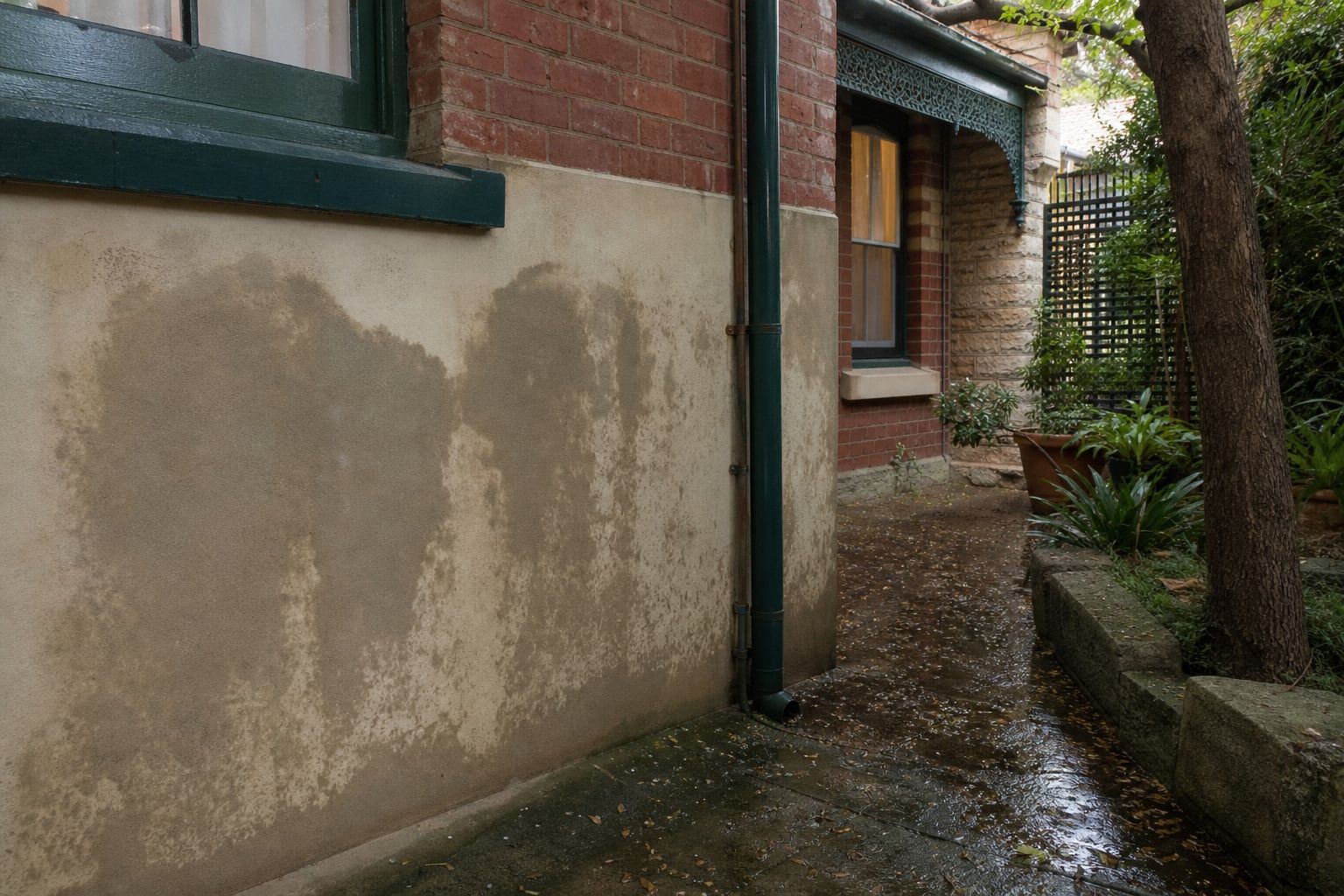
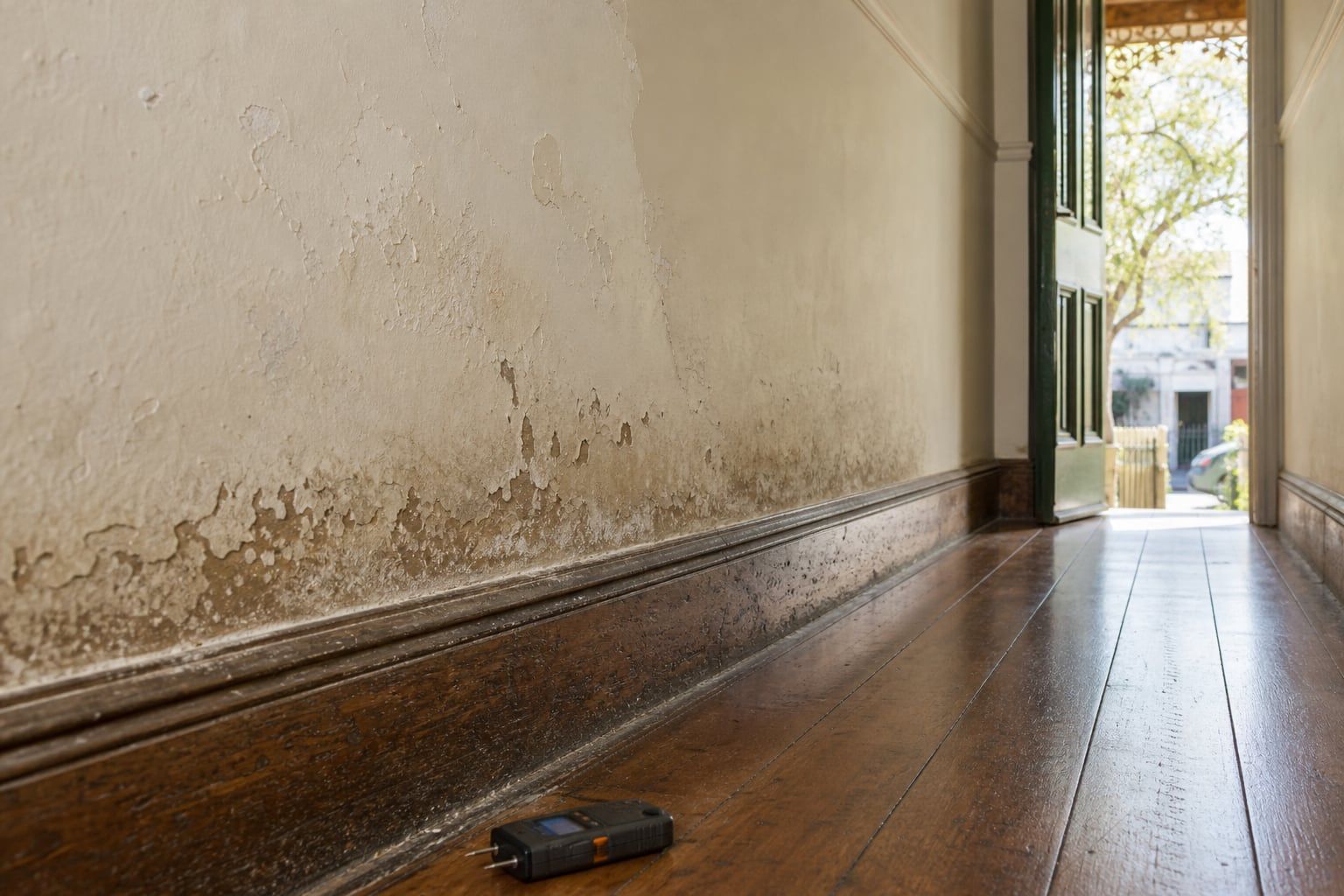
Damp that goes higher than a metre, gets worse after heavy rain, or appears on a wall with soil behind it suggests water is coming in sideways. You may see salt deposits on walls, a musty smell in lower rooms, or paint lifting in large patches. Book a free inspection and we will tell you whether the wall needs tanking, drainage, a damp course or a mix.
Updated
What good waterproof tanking and drainage looks like
Frequently asked questions
What is negative waterproofing?
It is waterproofing applied to the inside face of a wall, where you can't get to the outside, such as a wall against the ground or a neighbour's property. The system is designed to hold back water pushing in from behind.
Is tanking the same as a damp course?
No. A damp course stops water rising up through a wall. Tanking stops water coming through the face of a wall from soil or water behind it. Some walls need both.
Can you fix drainage on a tight terrace block?
Usually, yes. Most fixes are small: regrading a courtyard, adding a grated drain, reconnecting a downpipe or lowering a garden bed. We tell you what's practical for your block.
Waterproof Tanking and Drainage in the Inner West: step by step
- Trace the waterWe find where water is coming from: ground against the wall, a neighbour's raised yard, broken pipes or poor falls.
- Prepare the wallPlaster and loose material are removed back to sound masonry so the waterproofing bonds properly.
- Tank the wallA cement-based waterproofing system is applied to the inside face to resist water pressure from outside.
- Fix the drainageWhere we can, we also deal with the outside cause: drains, falls, downpipes and ground levels.
Waterproof Tanking and Drainage guides for Inner West homeowners
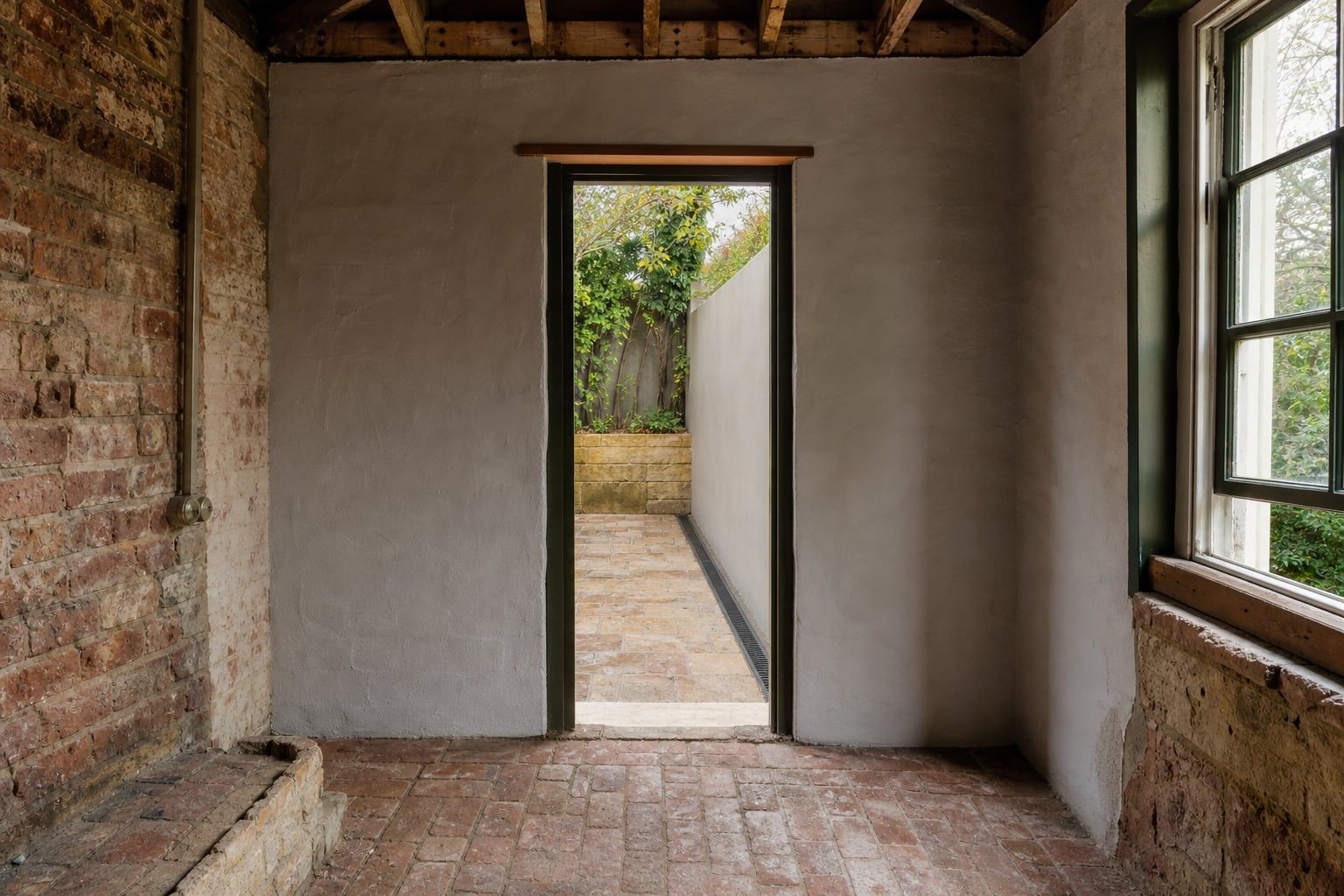
Waterproof Tanking and Drainage across the Inner West
Ready to get it quoted?
Get a fast, free quote from a local damp specialist. No obligation.