Rising damp salt efflorescence: the white powder on your walls
What the white crystals on damp walls are, why they keep coming back, and how salt-damaged walls are repaired.
Rising damp salt efflorescence is the white, powdery or crystalline deposit that appears on damp walls. It can look like fluff, crust or fine frost, and it often sits along a line at about the same height as a tide mark. In older Inner West homes it is one of the most reliable signs of rising damp, and one of the main reasons damp-affected walls are so hard to repair properly. This guide explains what salt efflorescence is, why it keeps coming back, and what it takes to fix the wall.
What efflorescence is
Groundwater and the masonry itself contain dissolved salts. When a wall draws water up from the ground, those salts travel with it. At the surface the water evaporates, but the salts can’t, so they’re left behind as crystals. Over time a band of salt builds up in the plaster and on its surface.
The salts involved are mostly sulfates, chlorides and nitrates. Nitrates and chlorides are especially common in older homes because they come from the ground and from decades of household use, and they’re hygroscopic, which means they draw moisture out of the air. That is the key to why salt-damaged walls behave the way they do.
Why salt damages plaster and paint
When salt crystals form inside plaster, they grow and expand in the pores. That pressure breaks the plaster down from within, so it becomes sandy, crumbly and hollow. On the surface, crystals push paint off the wall, causing the bubbling paint and plaster that so often goes with rising damp.
Because the salts draw moisture from the air, salty plaster gets damp whenever the weather is humid, even if water has stopped rising from below. That is why a wall can stay damp and stained after a damp course goes in, and why replastering with ordinary plaster over a salt-laden wall almost always fails.
Reading the signs
Efflorescence at the base of internal walls, often in a band with a tide mark above it, points to rising damp. Salt that comes and goes with the weather, getting worse in humid spells and drier in winter heating, shows the plaster is loaded with hygroscopic salts.
On external brickwork, a white bloom along the base of the wall, especially where paving or soil sits against it, suggests the wall is wet at the bottom. On the face brick of Inner West terraces and cottages, look closely at the mortar joints too. Crumbling, sandy mortar and spalling brick faces near the ground are both signs of salt attack.
Salt on a wall high up or in a patch, rather than a band, is more likely to come from a leak, a faulty gutter or a downpipe soaking the wall.
What doesn’t work
Washing it off. Water dissolves the salt and carries it back into the wall, where it crystallises again as the wall dries.
Painting over it. Paint traps moisture and the salts keep growing, pushing the new paint off.
Sealers and waterproof coatings. These can stop salt appearing on the surface for a while, but the moisture and salt are pushed higher up the wall, spreading the damage.
Ordinary plaster or plasterboard. Gypsum plaster breaks down in salty, damp conditions, and plasterboard fixed over a salty wall hides the problem until mould and staining appear behind it.
How a salt-damaged wall is fixed
A lasting repair has to deal with both the water and the salt.
Stop the source. If rising damp is confirmed, a new damp course goes in, usually a chemical damp course injected into the mortar bed. Where water is coming from the side, drainage and tanking deal with it. Ground levels outside are lowered if they’re bridging the damp course.
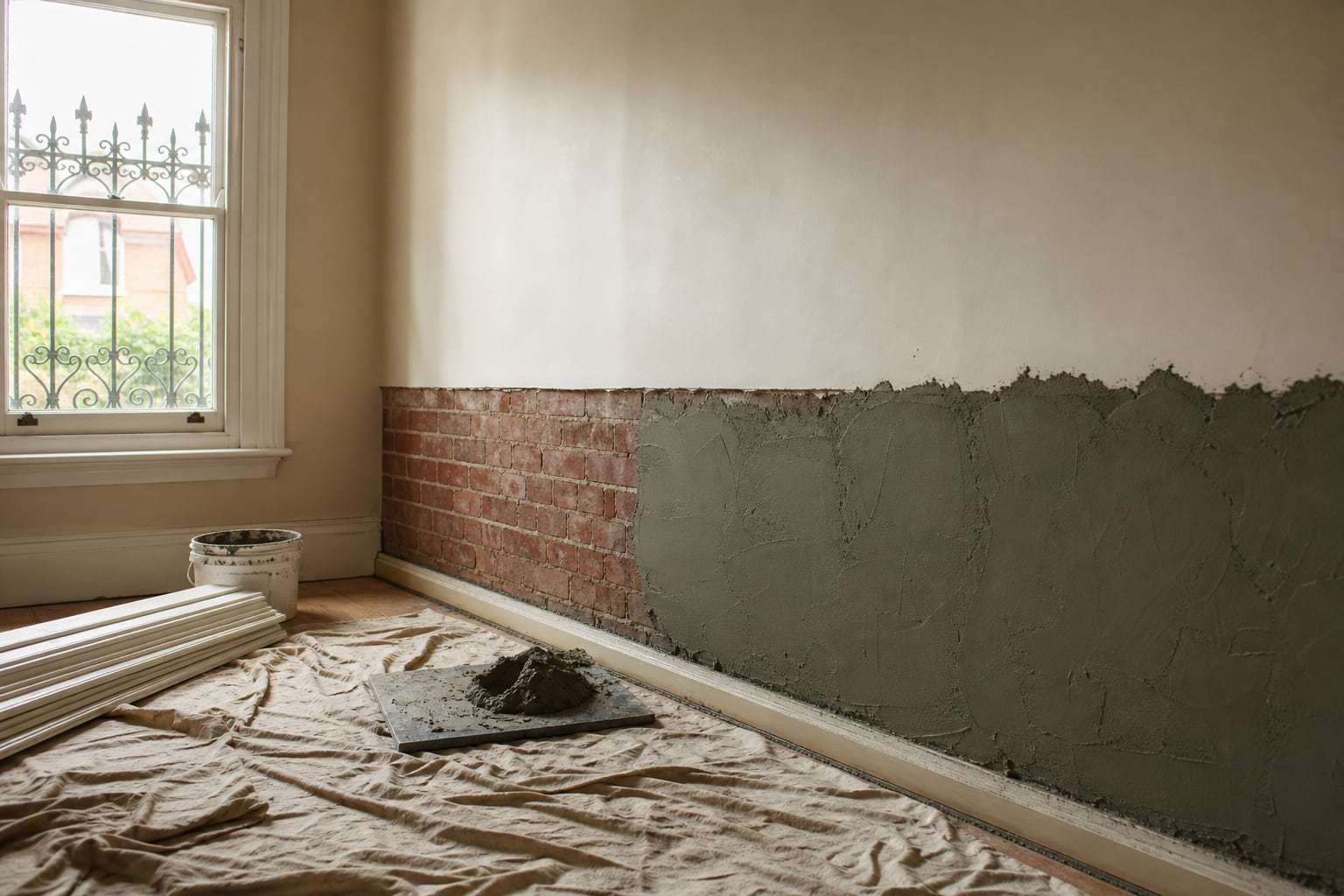
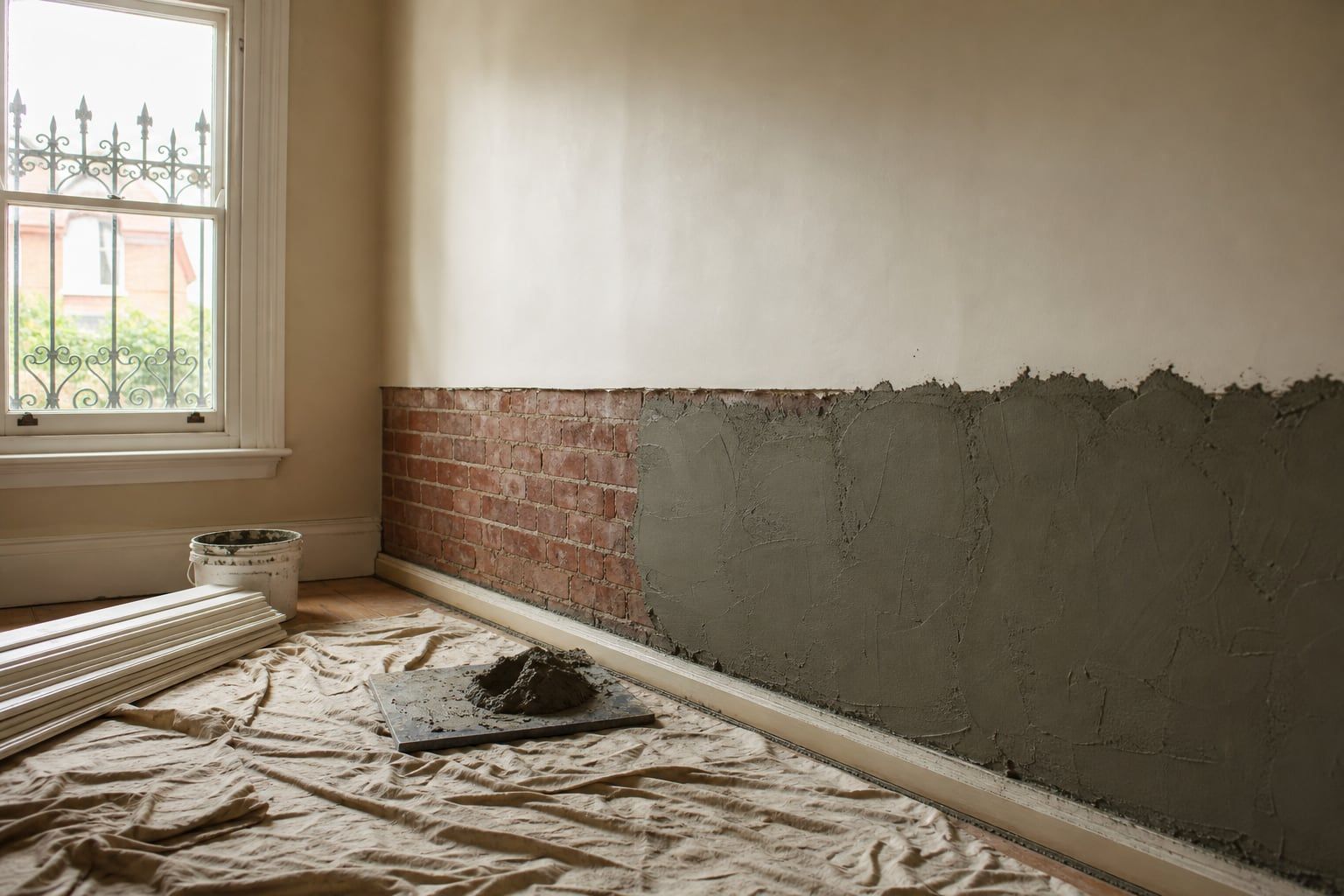
Remove the salt-laden plaster. The damaged plaster is cut back to bare masonry. Because salt travels higher than the visible line, we remove it to a safe margin above the efflorescence and confirm the height with readings.
Rake out and repoint where needed. Badly salt-damaged mortar is raked out and replaced with a mortar suited to old brick, usually lime-based, so the wall can keep drying.
Apply a salt-resistant render. The wall is replastered with a system designed for salt-contaminated masonry. These renders let moisture out while holding the salts within the render where they can’t damage the finish. This is the heart of our salt-damaged plaster repair service.
Finish and paint. The render is finished to match the room and painted with a breathable paint once it’s dry.
How long does it take to settle?
The repair itself is usually done in a few days. The masonry behind it takes longer to dry, sometimes months, depending on wall thickness, weather and ventilation. Because the salt-resistant render handles that drying without staining, you can repaint and use the room normally once the finish has cured. Keeping rooms ventilated, and making sure the subfloor has good airflow through subfloor ventilation where needed, helps the wall dry faster.
Salt efflorescence in Inner West homes
We see heavy salt build-up most in Victorian terraces with failed slate or bitumen damp courses, in sandstone and brick homes near the harbour and river in Balmain, Birchgrove and Drummoyne, and in low-lying streets near the Cooks River and old creek lines. Walls that have been cement rendered or painted with acrylic over many decades tend to be the worst affected.
If you’re finding white powder along your walls, the next step is a free inspection. We test the wall, find the cause and give you a written fixed-price quote for complete rising damp treatment and plaster repair. We cover every Inner West suburb, including rising damp in Glebe and rising damp in Newtown.
Updated
Frequently asked questions
Is the white powder on my wall mould?
Usually not. Salt efflorescence is white, powdery or crystalline, and feels gritty. It dissolves in water. Mould is usually black, green or grey, looks fuzzy or spotty, and smears. Salt can be on the same wall as mould, though.
Can I brush the salt off?
Yes, dry-brush it off and vacuum it up rather than washing it. Washing dissolves the salt and pushes it back into the wall, where it crystallises again. Brushing is only a tidy-up; the salt keeps coming until the cause is fixed.
Is efflorescence on outside brickwork a problem?
On new brickwork, some white bloom is normal as the bricks dry and usually washes off over time. On old brickwork, recurring salt near the base of the wall points to rising damp or water sitting against the wall.
Salt-Damaged Plaster Repair in the Inner West
More guides for Inner West homeowners
Ready to get it quoted?
Get a fast, free quote from a local damp specialist. No obligation.