Salt-Damaged Plaster Repair Inner West
The repair that stops stains and flaking paint coming back once the damp course is in.
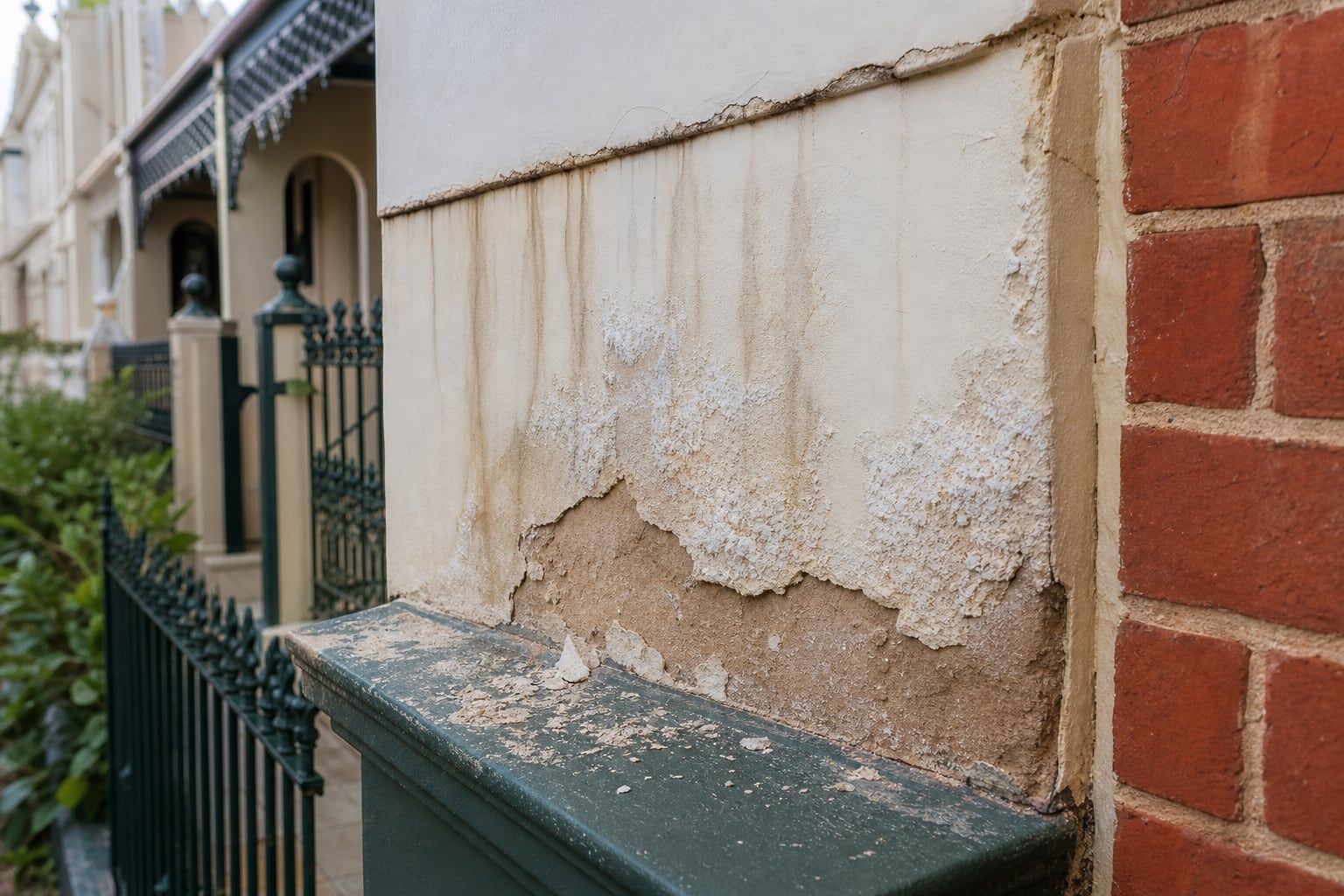
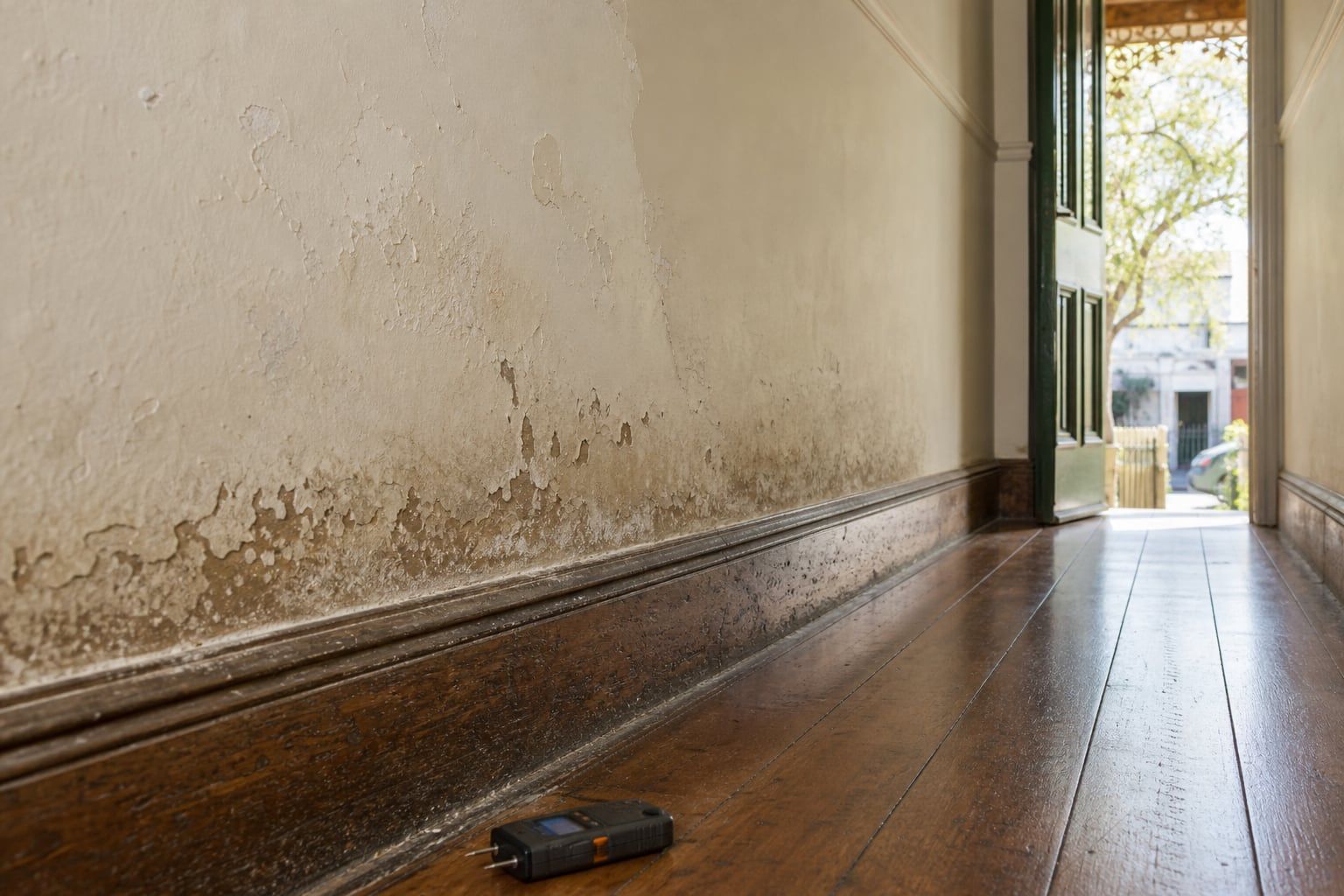
When water rises through a wall it carries dissolved salts from the ground and the masonry. As the water evaporates at the surface, the salts are left behind in the plaster. Over years they build up in a band above the floor, which is why rising damp leaves white powder, crumbling plaster and paint that won’t stay on. Even after the damp course is fixed, that salt stays in the wall. Salt-damaged plaster repair removes it and replaces the plaster with a system that can cope.
Why salt is the real problem
Salt is hygroscopic: it pulls moisture out of the air. Plaster loaded with salt stays damp in humid weather even when no water is rising from below, so stains and bubbling come back. That is why so many Inner West homeowners have repainted the same wall several times. Our guide to salt efflorescence explains what the white crystals are and why scrubbing them off doesn’t help.
How we repair the wall
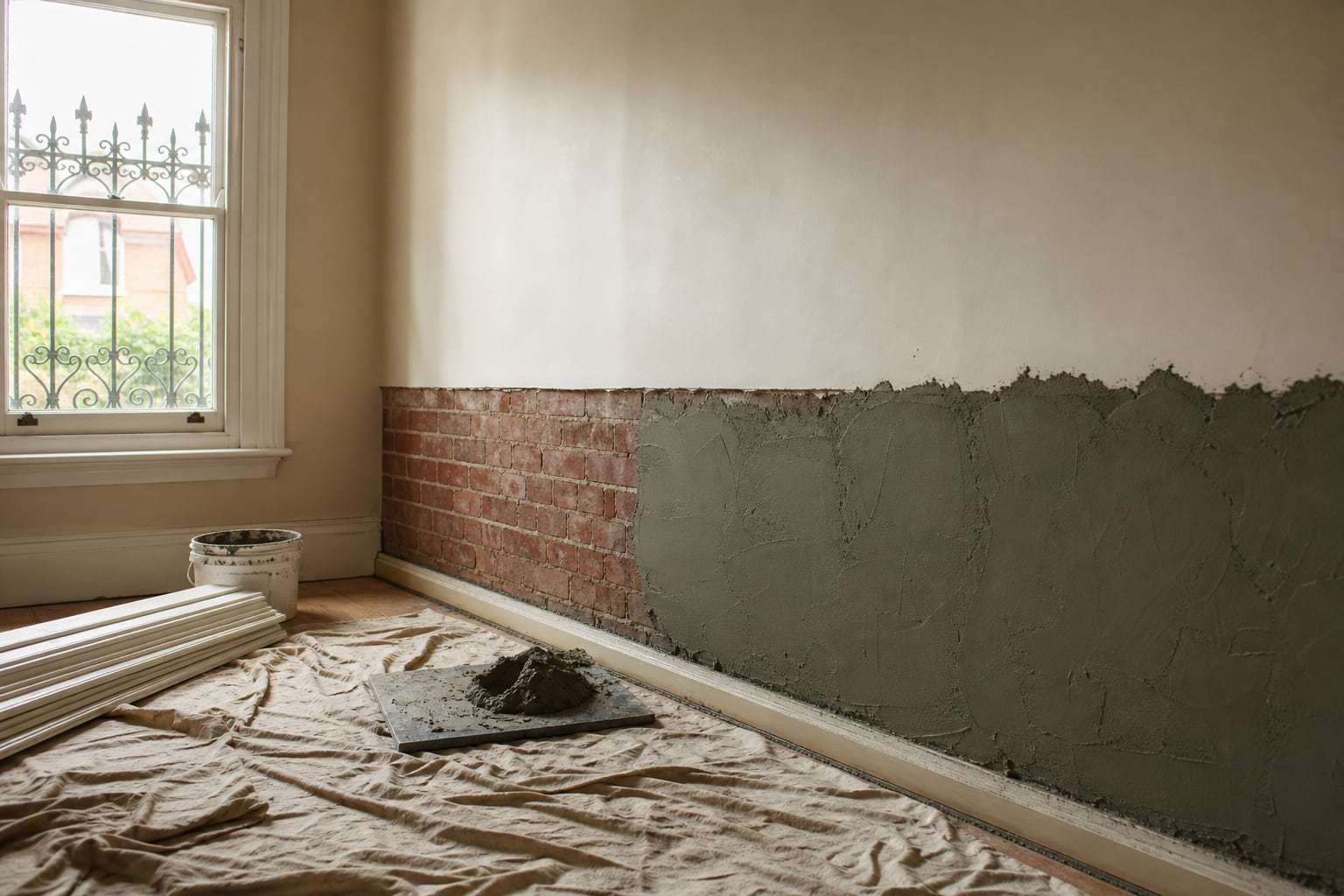
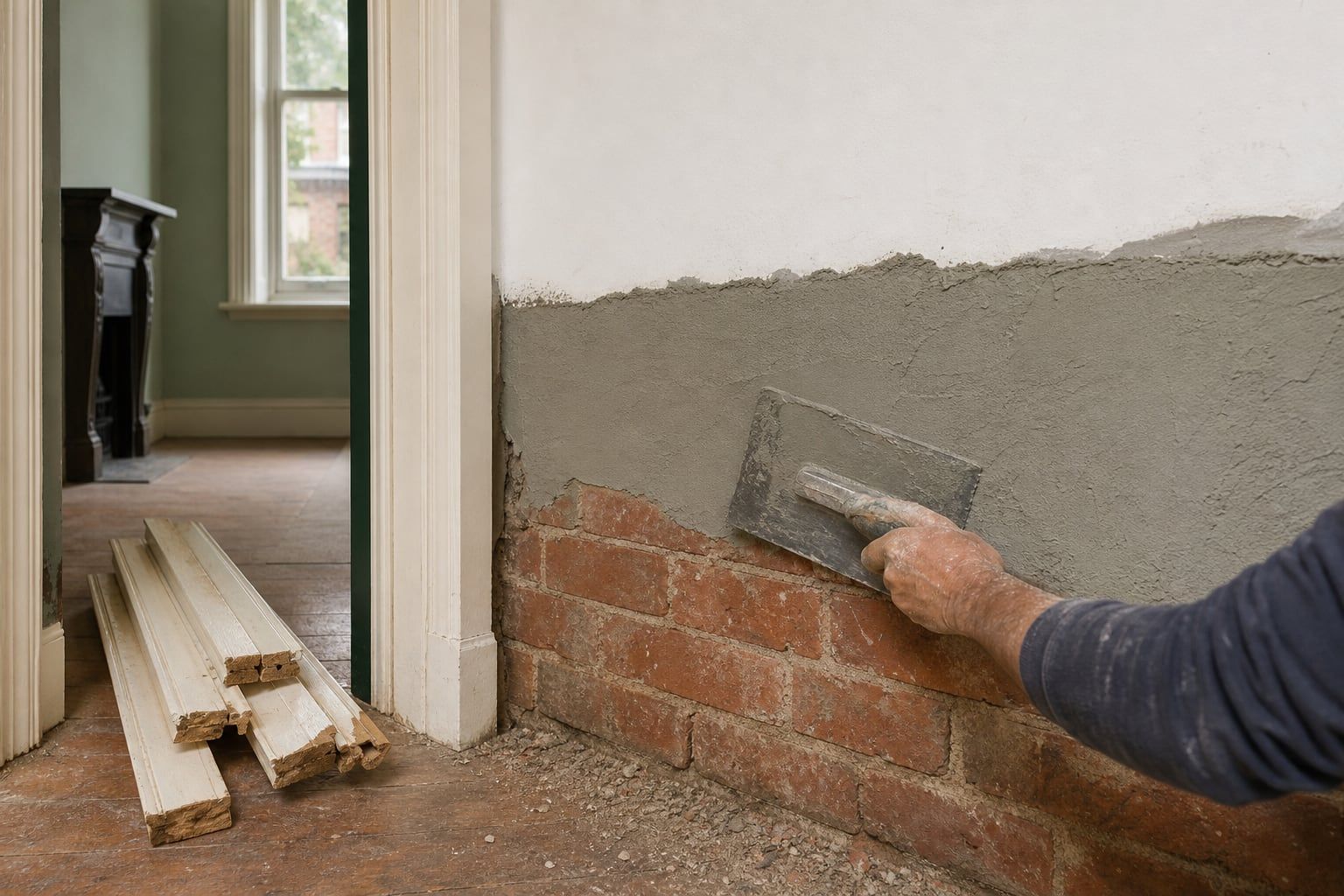
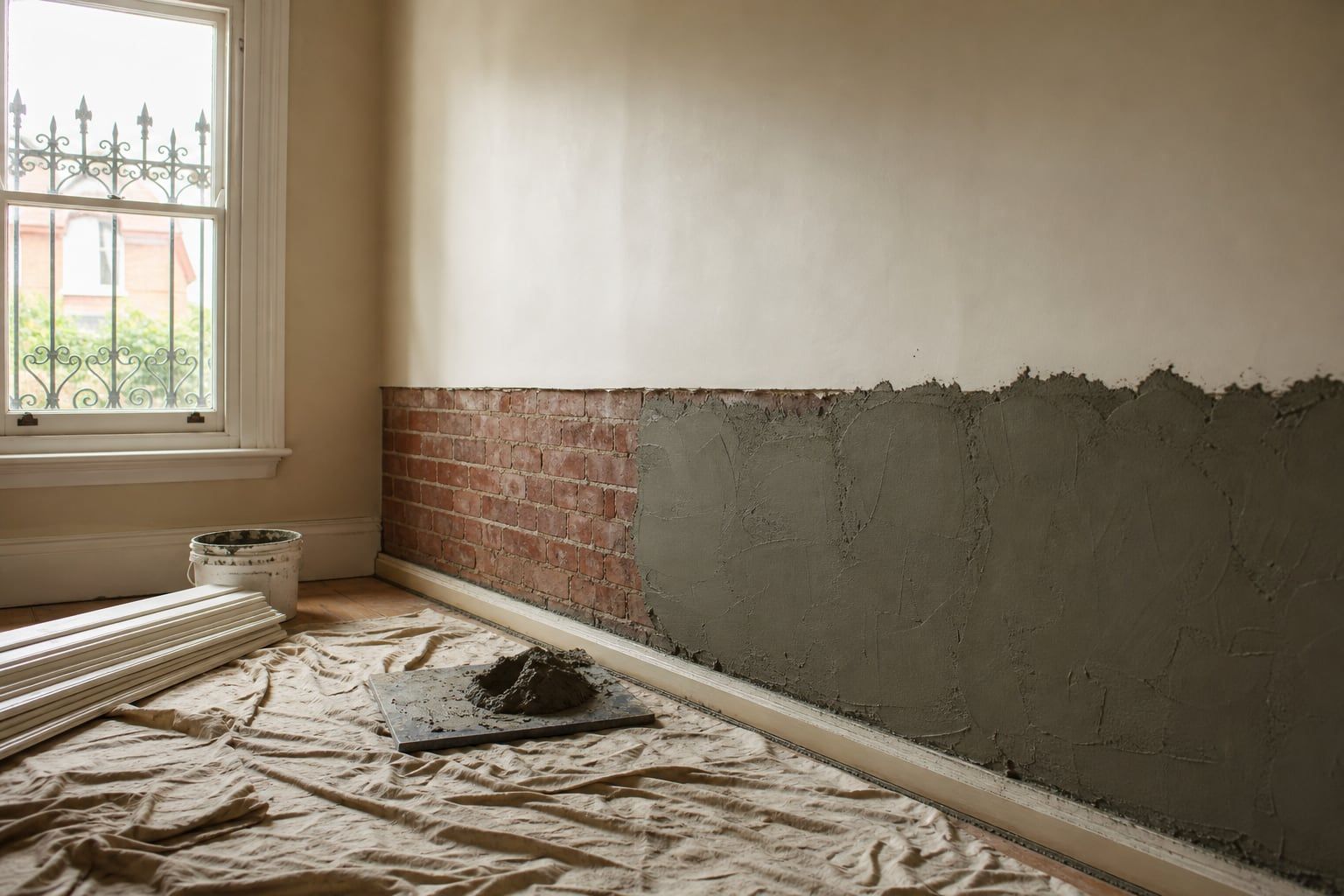
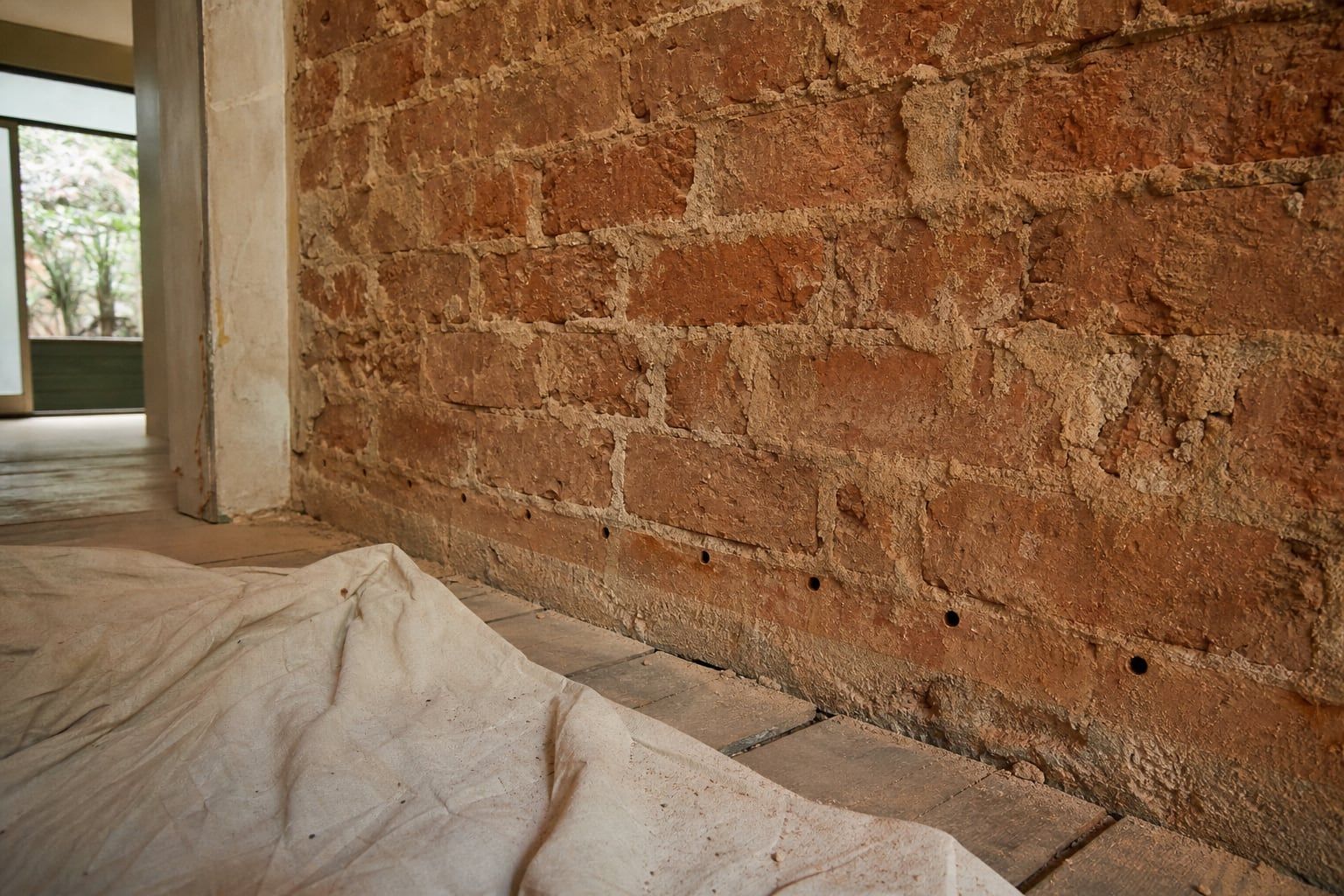
First we find how far up the salt goes. It is often higher than the visible tide mark, so we take readings and cut back to a safe margin above it. The old plaster comes off down to the masonry, and loose mortar is raked out. Then we apply a salt-resistant render system in coats. These renders let the wall keep drying while holding the salts inside the render where they can’t spoil the paint.
The finish is matched to the rest of the room, whether that is a smooth set finish in a Victorian hallway or a sand finish in a laundry. Skirtings are refitted, or new ones supplied if the old ones have rotted.
When to replaster
Timing matters. The wall needs to have dried enough after the damp course goes in. Replaster too soon and moisture is trapped behind the new surface. We tell you the expected drying time for your walls in the quote and check readings before the render goes on. Good ventilation in the room, and subfloor ventilation under the floor where it’s needed, shortens the wait.
Avoiding common mistakes
Ordinary gypsum plaster and plasterboard fixed straight over a damp wall are the most common mistakes we fix. Gypsum breaks down when it is wet and salt-laden, and plasterboard hides the problem until mould grows behind it. Cement render over old lime-mortar brick is another, because it traps moisture in the wall and pushes damp higher. Waterproof paints and sealers do much the same.
Part of the whole job
Plaster repair only lasts when the cause is fixed. That is why we quote it as part of complete rising damp treatment, together with a chemical damp course or physical damp course as the wall needs. If your problem is bubbling paint and plaster along the skirting, book a free inspection and we will tell you whether repair alone will do or the wall needs treating first.
Updated
What good salt-damaged plaster repair looks like
Frequently asked questions
Can I just patch and repaint the bad section?
Not if the plaster is full of salt. Salt draws moisture from the air, so patched plaster and fresh paint over it will stain and flake again within months, even after a damp course.
Why remove plaster above the visible damage?
Salt travels higher than the stain you can see. Taking plaster off to a safe margin above the tide mark stops a new line appearing just above the repair.
Can you match old lime plaster?
We use render systems suited to old masonry and finish them to sit flush with the existing plaster, so the repair is hard to pick once painted.
Salt-Damaged Plaster Repair in the Inner West: step by step
- Find the salt lineMoisture and salt readings show how far up the wall the plaster is contaminated.
- Remove the plasterPlaster is cut back to clean wall, usually some distance above the visible tide mark.
- Apply salt-resistant renderA render system designed to hold salts without staining is applied in coats to the right thickness.
- Finish and refitThe surface is finished to match the wall, skirtings go back on and the wall is ready to paint when dry.
Salt-Damaged Plaster Repair guides for Inner West homeowners
Salt-Damaged Plaster Repair across the Inner West
Ready to get it quoted?
Get a fast, free quote from a local damp specialist. No obligation.