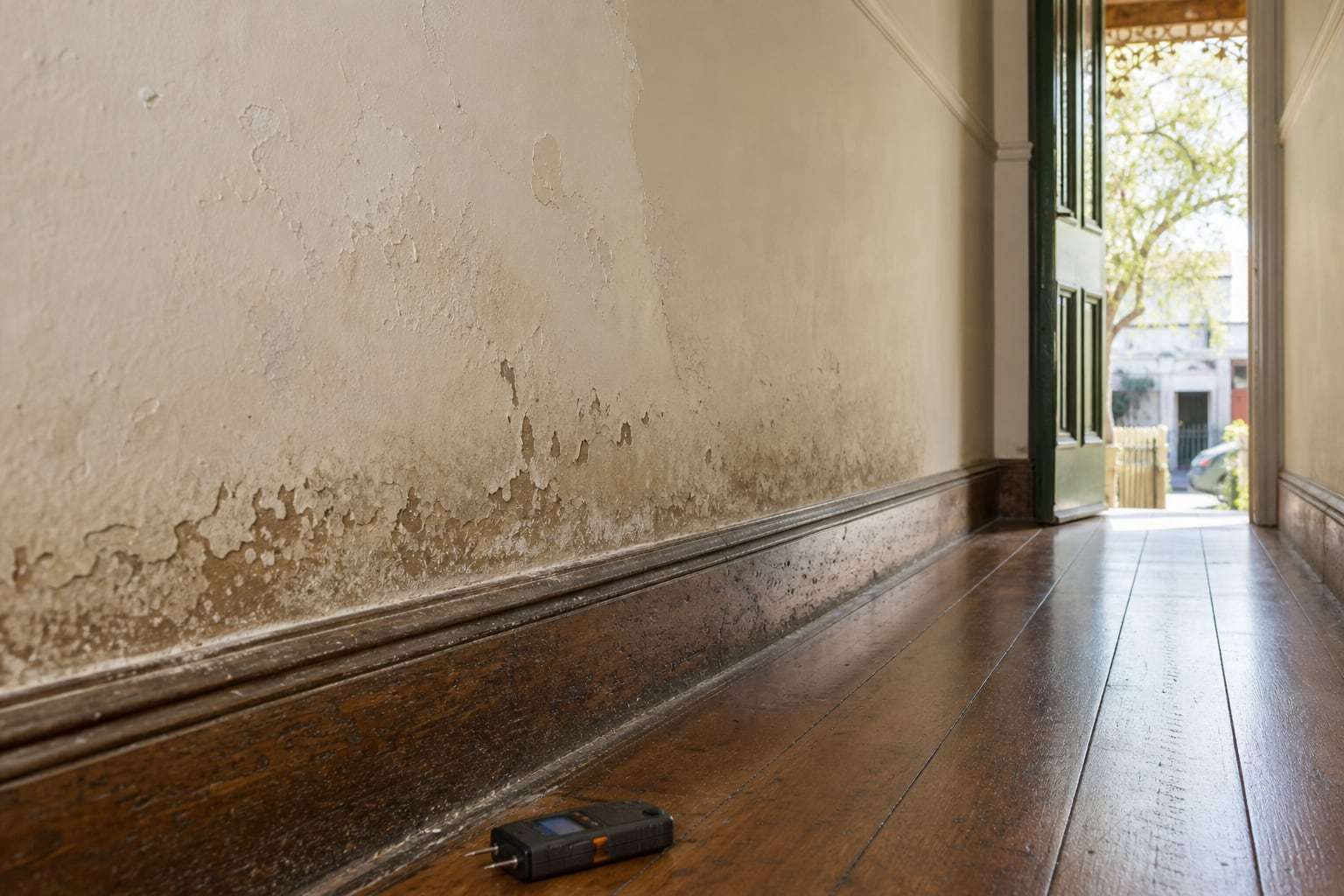
Rising damp tide marks: what that brown line on your wall means
Why a brown or white line forms along the bottom of damp walls, how to tell rising damp from other causes, and what fixes it.
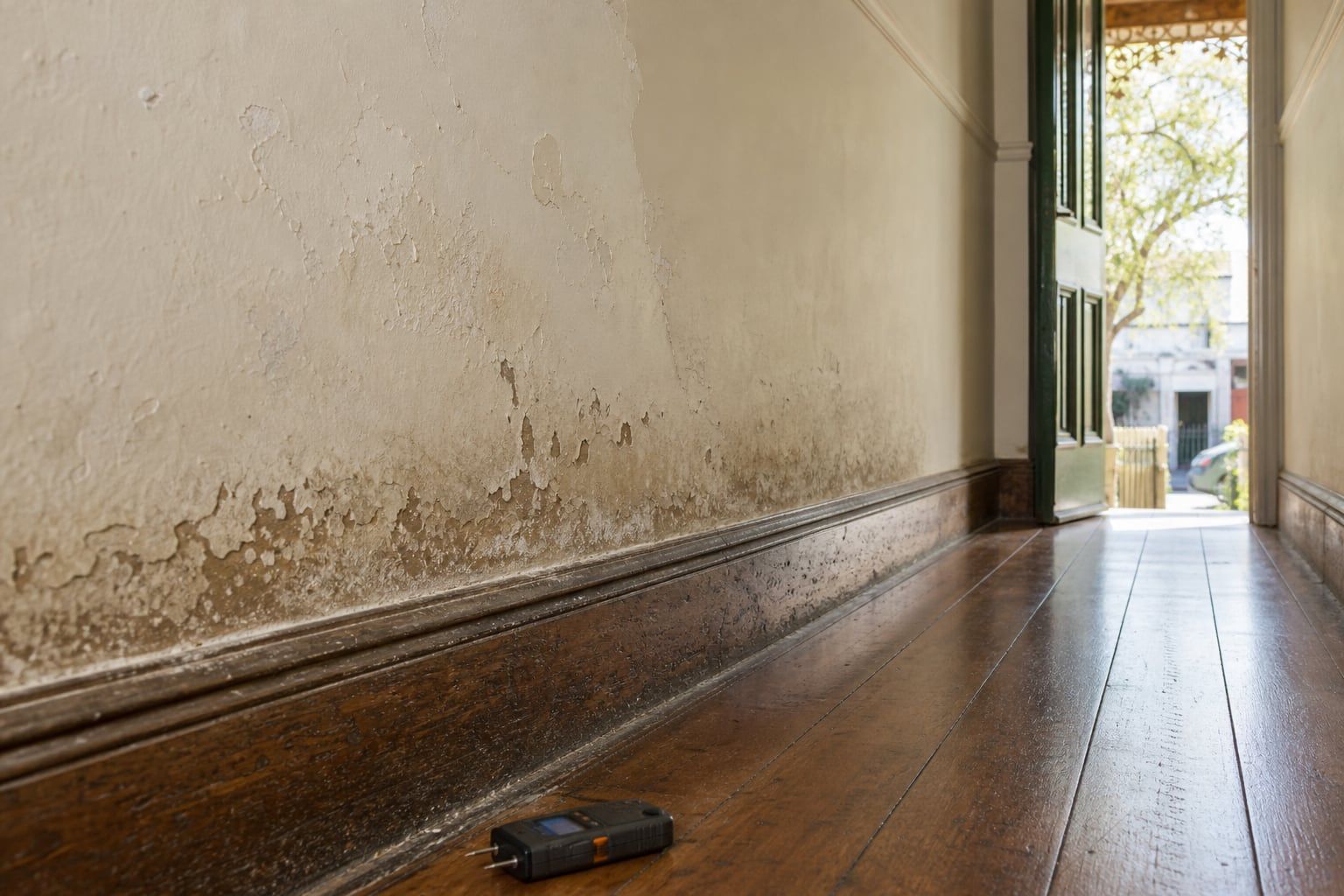
A tide mark is the brown, yellow or white line that forms along the lower part of a wall, usually somewhere between knee and waist height. It is one of the clearest signs of rising damp, and in the Inner West’s older terraces and cottages it is one of the first things people notice when they move in or strip old wallpaper. This guide explains what rising damp tide marks are, how to read them, and what it takes to get rid of them properly.
What a tide mark actually is
Brick, sandstone and lime mortar are porous. When the base of a wall sits in damp ground with no working damp course, water is drawn up through the pores the way a paper towel soaks up a spill. That water carries salts from the soil and from the masonry. As it rises, it also evaporates from the surface of the wall. The point where the rate of rising equals the rate of evaporation is roughly where the water stops climbing.
At that height, evaporation leaves salts and dissolved minerals behind. Over months and years they build up into a visible band. Brown and yellow staining comes from minerals and dirt carried in the water; a white, fluffy or crystalline line is salt. Below the line the plaster is often damp, soft or blown; above it the wall can look perfectly fine.
Why the line sits where it does
The height of the tide mark tells you something about the wall. A wall that can breathe freely, with lime plaster and breathable paint, tends to have a lower mark because moisture evaporates quickly. A wall that has been sealed with cement render, acrylic paint, vinyl wallpaper or plasterboard can’t lose moisture as easily, so the water climbs higher before it evaporates. That is why so many renovated Inner West homes have tide marks higher than the original builders would ever have seen.
Thick walls also carry water higher. Double-brick party walls in Newtown and Glebe terraces, and the sandstone footings common in Balmain and Birchgrove, can hold a lot of water and lift it well above the floor.
Rising damp or something else?
Not every stain near the floor is rising damp. Before treating a wall, it is worth ruling out the alternatives.
Leaking plumbing. A leaking pipe in or behind a wall causes a patch that is darkest near the leak and often spreads in a rough circle. It doesn’t usually form a level band along the whole wall.
Water coming in sideways. Where garden beds, a raised courtyard or a neighbour’s yard sit higher than your floor, water can push through the wall from the side. The damage often goes higher than a typical tide mark and gets worse after heavy rain. That needs waterproof tanking or a drainage fix rather than a damp course alone.
Condensation. Cold external walls in bathrooms, laundries and bedrooms can collect condensation, especially behind wardrobes. Condensation tends to show as mould spots and patches near ceilings, corners and windows, not as a neat band at the bottom. Our guide to mould on walls covers how to tell the difference.
Bridged damp courses. Sometimes the original damp course is fine, but paving, soil or render has been built up over it outside. The tide mark then starts above the new ground level rather than at the floor. Fixing the outside level can be enough.
The only reliable way to sort these out is a proper inspection with moisture readings taken at several heights on both sides of the wall, along with a look at the outside ground levels, gutters, downpipes and subfloor.
What usually comes with a tide mark
Tide marks rarely turn up on their own. Look for paint that bubbles and lifts below the line, plaster that sounds hollow when you tap it, white powder on the surface, skirting boards that feel soft or have started to rot, and a musty smell. Our guides to bubbling paint and plaster and salt deposits on walls go into those signs in more detail.
How tide marks are fixed
Getting rid of a tide mark for good means dealing with three things in order.
First, stop the water. If rising damp is confirmed, a new barrier is installed near the base of the wall. For most solid brick walls in the Inner West that is a chemical damp course injected into the mortar bed. Some stone walls or very wet walls suit a physical damp course instead. Outside ground levels are lowered if they sit above the new barrier, and blocked subfloor vents are cleared.
Second, remove the salt. The plaster below and just above the tide mark is loaded with salt. If it is left in place it keeps pulling moisture from the air, and the line comes back. The plaster is cut back to a safe margin above the mark, down to bare masonry.
Third, replaster with the right system. The wall is rendered with a salt-resistant system designed for damp-affected masonry, then finished to match the room. This is covered in our salt-damaged plaster repair service. Ordinary gypsum plaster or plasterboard over a salt-laden wall is the most common reason tide marks return after a renovation.
How long until the mark is gone?
The physical repair takes days, but the wall itself takes longer to dry out. The masonry above the new damp course holds the water it has collected over many years, and it dries gradually over the following weeks and months. Warm, dry weather and good airflow speed this up. Because the salt-resistant render lets the wall keep drying behind it, you can usually move back into the room and repaint once the finish coat is dry, and the stain won’t come back.
Tide marks in Inner West homes
We see tide marks most often in Victorian terraces with failed slate damp courses, Federation cottages where paths and garden beds have been built up against the walls, and homes in low-lying streets near the Cooks River and the old creek lines of Marrickville and Leichhardt. Rooms on the shady side of the house, and walls with no ventilation under the floor, are usually the worst.
If you have found a tide mark, the next step is a free inspection. We take readings, explain what is causing it, and give you a written fixed-price quote for complete rising damp treatment if you need it. We cover the whole Inner West, including rising damp in Glebe and rising damp in Marrickville.
Updated
Frequently asked questions
How high do rising damp tide marks usually go?
Most sit somewhere between about 300 mm and a metre above the floor. Higher marks are possible on very wet or thick walls, or where cement render or waterproof paint has stopped the wall drying, but marks well above a metre often point to another cause as well.
Will painting over a tide mark get rid of it?
Not for long. The stain comes from salt and moisture in the plaster, so it bleeds back through new paint, often within a season. Stain-blocking primers only delay it.
Does a tide mark mean the damp is still active?
Not always. Old marks can stay after a problem has been fixed. Moisture readings at different heights tell us whether the wall is still drawing water.
Rising Damp Treatment in the Inner West
More guides for Inner West homeowners
Ready to get it quoted?
Get a fast, free quote from a local damp specialist. No obligation.