Mould on walls: condensation, rising damp or a leak?
How to tell what is causing mould on your walls, why cleaning it off doesn't stop it, and how each cause is fixed.
Mould on walls is never just a cleaning problem. It is a sign that part of the wall is staying wet, and until that moisture is dealt with, the mould will come back. In the Inner West’s older homes, with their solid brick walls, timber floors and often limited ventilation, mould is common, and it can have several quite different causes. This guide helps you work out which one you’re dealing with, and what fixes it.
Mould needs moisture
Mould spores are everywhere in the air. They only grow when they land on something damp for long enough. So the question with mould on walls is always where the moisture is coming from. In practice it is one of three things: condensation, rising damp, or a leak, including water getting in from outside.
Where the mould is tells you a lot
High on the wall, in corners and around the ceiling, especially on external walls, in bathrooms, laundries and bedrooms. This is usually condensation. Warm, moist air from showers, cooking, drying clothes and breathing meets a cold surface and condenses. Corners and the junction with the ceiling are the coldest spots, and air doesn’t move there, so mould grows.
Behind furniture and inside wardrobes on external walls. Also usually condensation, because the furniture stops warm air reaching the wall, keeping it cold and damp.
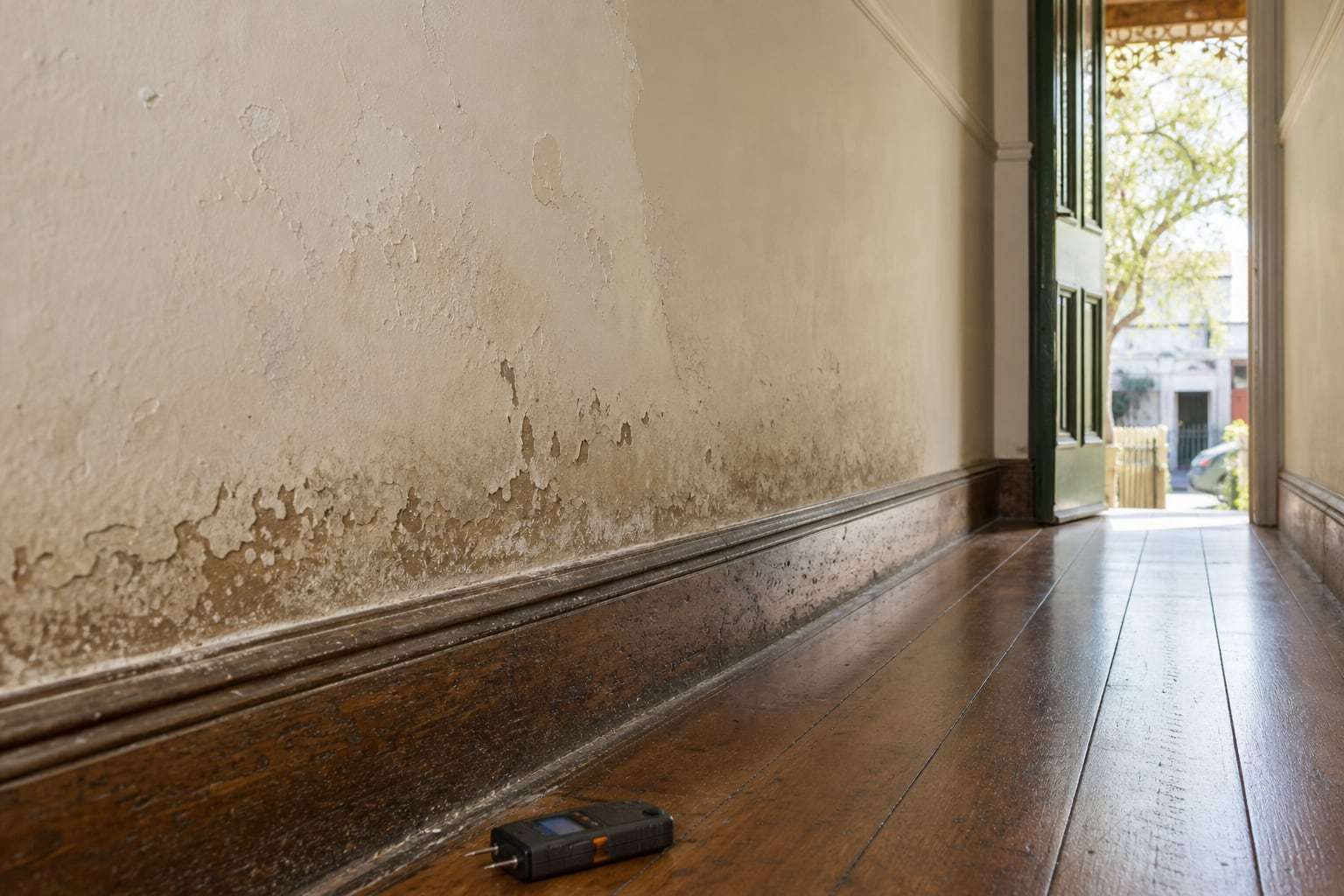
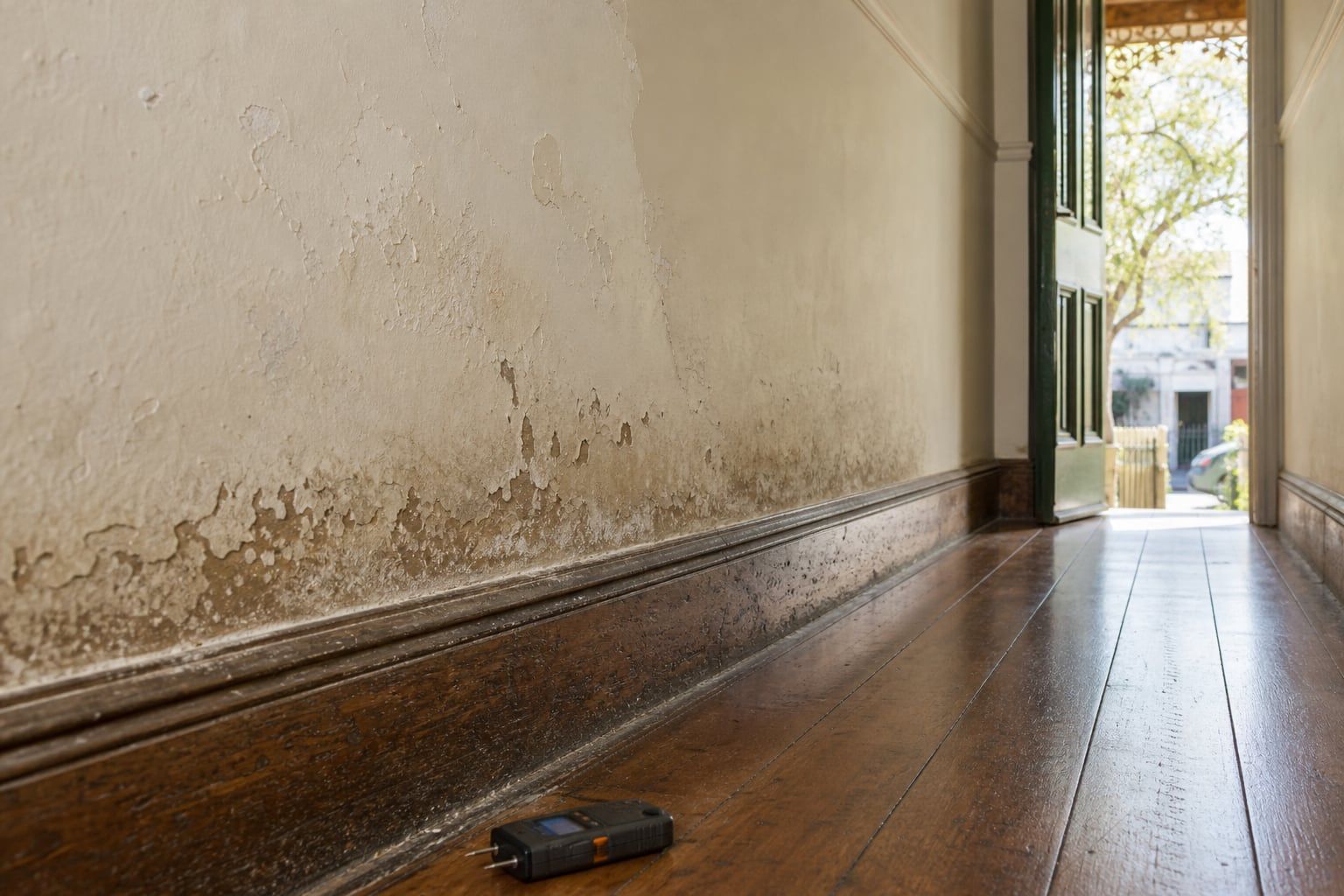
Low on the wall, in a band above the floor, often with a tide mark, salt crystals or bubbling paint. This points to rising damp. The base of the wall stays wet from water drawn up out of the ground, and mould grows on the damp plaster and behind skirting boards.
On internal walls near the floor, in rooms with timber floors. Often rising damp fed by a damp subfloor, together with a musty damp smell.
In a patch around a window, a pipe, the shower or a roof valley. A leak: a failed window seal, a plumbing leak, a cracked shower recess, or a roof or gutter problem.
Low on a wall that has soil or a neighbour’s yard behind it. Water coming through the wall from the side, which is fixed with waterproof tanking and drainage.
A quick test for condensation
If you’re not sure whether it is condensation, look at the windows on a cool morning. Heavy condensation on the glass, especially in bedrooms, means there is a lot of moisture in the air. Mould that is worst in winter, in rooms that are closed up, and in the coldest corners, is very likely condensation. Rising damp tends to be steadier through the year and is often worse after long wet periods.
Why cleaning isn’t enough
Bleach and mould sprays kill and whiten the mould on the surface, but on porous plaster the mould grows into the material, and the damp that fed it is still there. Within weeks or months it returns. Painting over mould with anti-mould paint has the same result if the wall stays wet. Cleaning is worth doing to remove the mould you can see, but only once the moisture has been dealt with.
Fixing each cause
Condensation. Improve ventilation: use exhaust fans in bathrooms and the kitchen that vent outside, not into the roof space; open windows when showering and cooking; avoid drying clothes indoors; and move furniture slightly off external walls. Keeping rooms evenly heated also helps. In older homes with no wall insulation, cold external walls will always be prone to condensation, so airflow matters even more.
Rising damp. Install a new damp course, usually a chemical damp course injected into the mortar bed, then replace the salt-damaged plaster with a salt-resistant system. Where the subfloor is damp, add subfloor ventilation so the internal walls can dry. The full process is explained on our rising damp treatment page.
Leaks. Find and fix the leak, whether that is the roof, a gutter, a window, a shower or a pipe, then let the wall dry and repair the plaster.
Water from outside. Lower garden beds and paving, fix the fall of courtyards so water runs away from the house, reconnect downpipes, and where needed, waterproof the inside face of the wall.
Many homes have more than one cause. A bedroom on the shady side of a terrace can have condensation in the corners and rising damp along the skirting at the same time. Treating both is the only way to stop the mould for good.
Health and mould
Mould can trigger asthma and allergies and is a particular concern for babies, older people and anyone with a weakened immune system. If someone in your home is affected, deal with the cause promptly, keep the area ventilated, and talk to your GP about any symptoms.
Getting a proper diagnosis
The fastest way to stop mould returning is to know exactly what is causing it. We take moisture readings at different heights, check the subfloor, look at ventilation and drainage, and tell you plainly whether you need a damp course, ventilation, a leak fixed or simply better airflow. The inspection is free, and if work is needed you get a written fixed-price quote. We cover the whole Inner West, including rising damp in Balmain and rising damp in Leichhardt.
Updated
Frequently asked questions
Is it safe to clean mould off walls myself?
Small areas on painted walls can be cleaned with a damp cloth and a household mould cleaner, wearing gloves and a mask with the room ventilated. Large areas, mould on porous plaster, or anyone in the house with asthma or a weakened immune system are good reasons to get help.
Why does mould keep coming back in the same spot?
Because the moisture that grew it is still there. Cleaning removes the mould you can see, but unless the damp, condensation or leak is fixed, it grows back.
Does mould mean I have rising damp?
Not necessarily. Mould needs moisture, and condensation is a very common cause. Mould low on a wall, with a tide mark or salt, suggests rising damp; mould high up or in corners usually means condensation or a leak.
Rising Damp Treatment in the Inner West
More guides for Inner West homeowners
Ready to get it quoted?
Get a fast, free quote from a local damp specialist. No obligation.